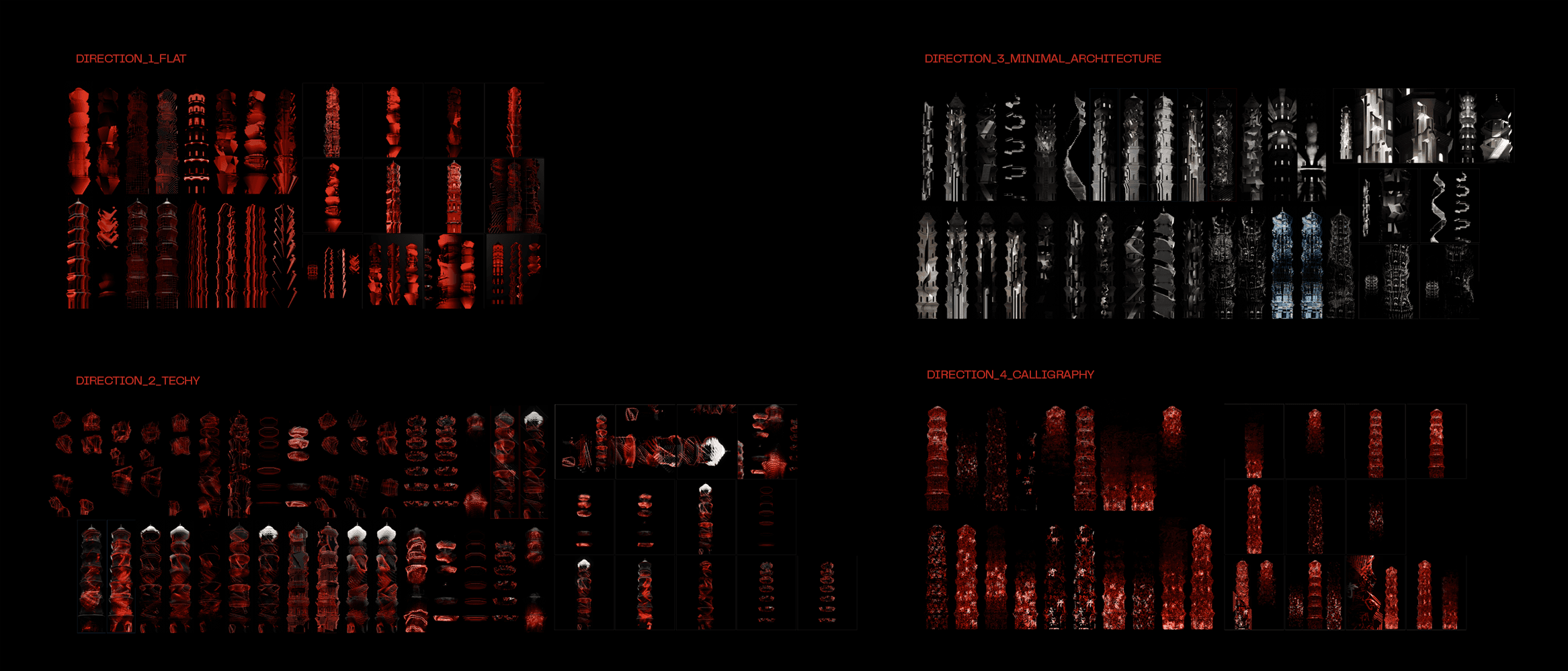
00_Project overview
The work had to respond to specific judging criteria — structure, alignment with the building, cultural relevance, and visual impact.
Because of this, each visual was designed with clear purpose — not as stylistic exploration, but as proof that the technical and creative challenges were actively solved. The goal wasn’t to showcase variety, but to demonstrate control: interaction with geometry, projection accuracy, responsive timing to sound, and the ability to adapt visuals to context rather than treat them as decoration.
The brief required:
-Architectural interaction with the tower’s geometry
-A clear narrative structure guided by sound
-References to cultural elements from the region
-Delivery within a tight timeframe
01_Flat
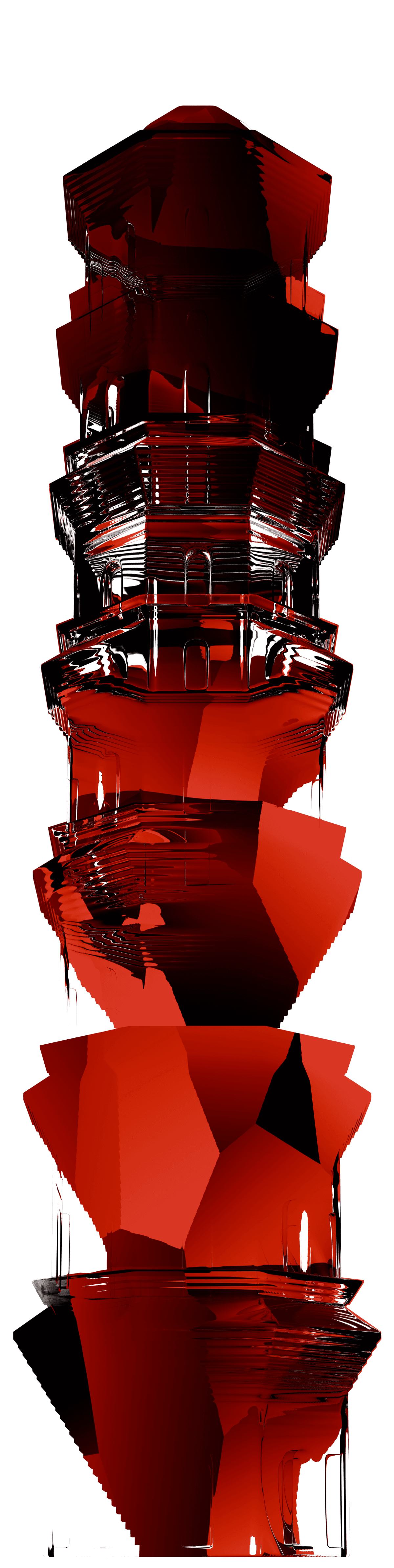
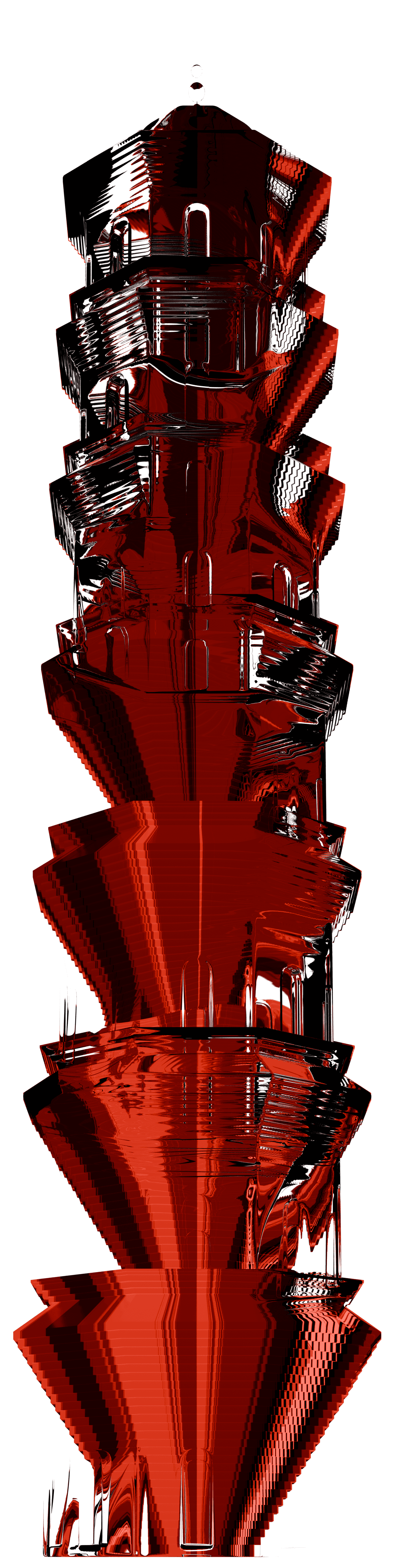
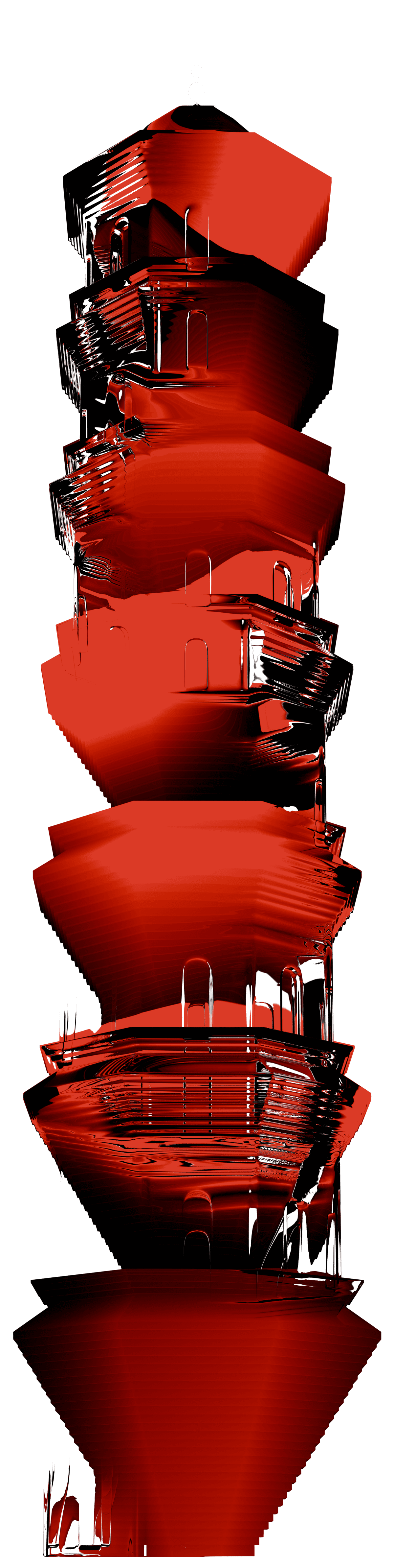
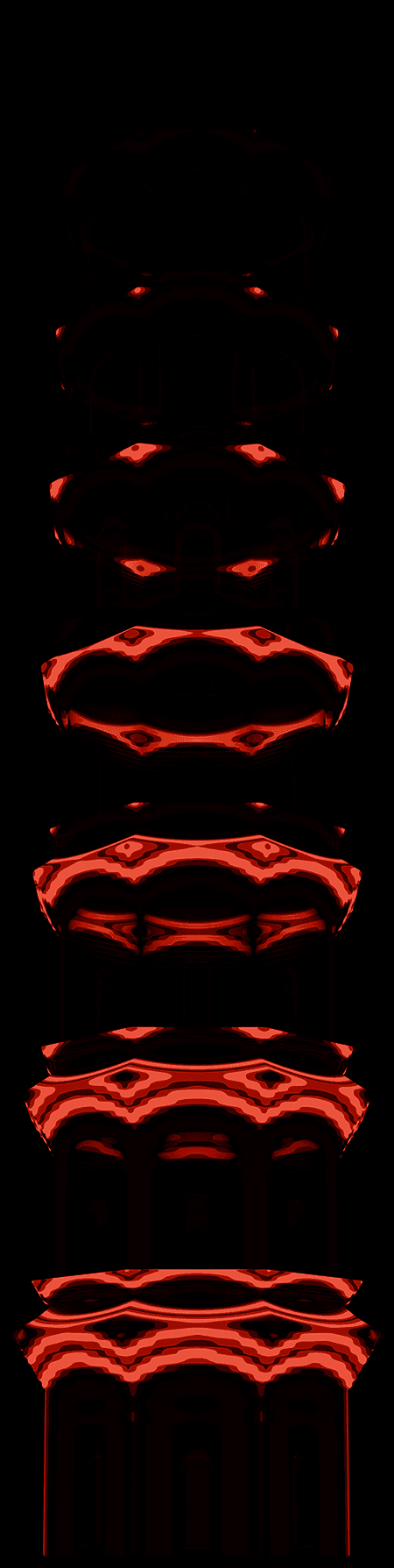
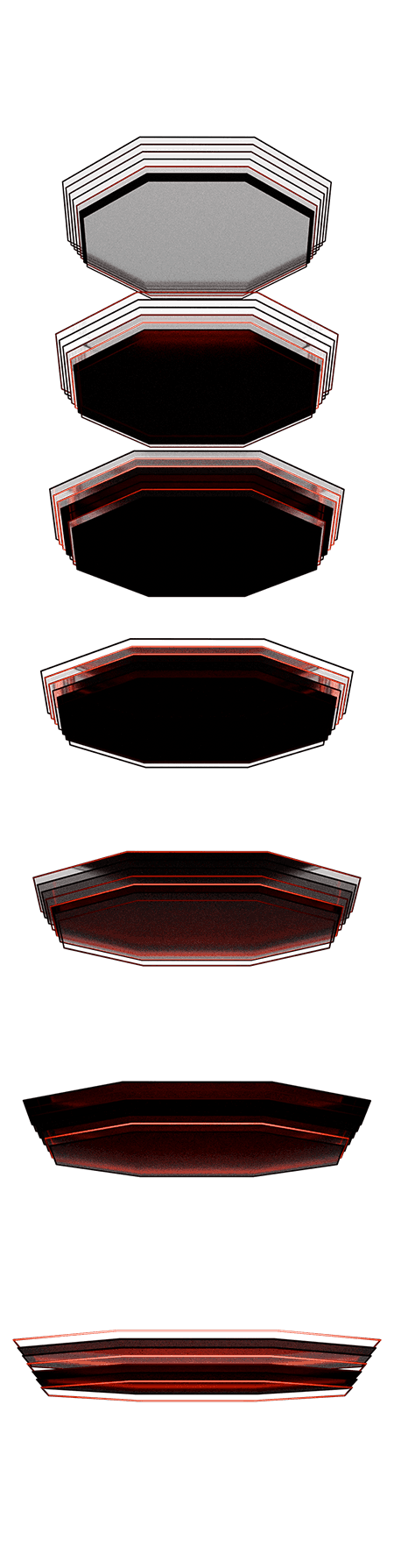
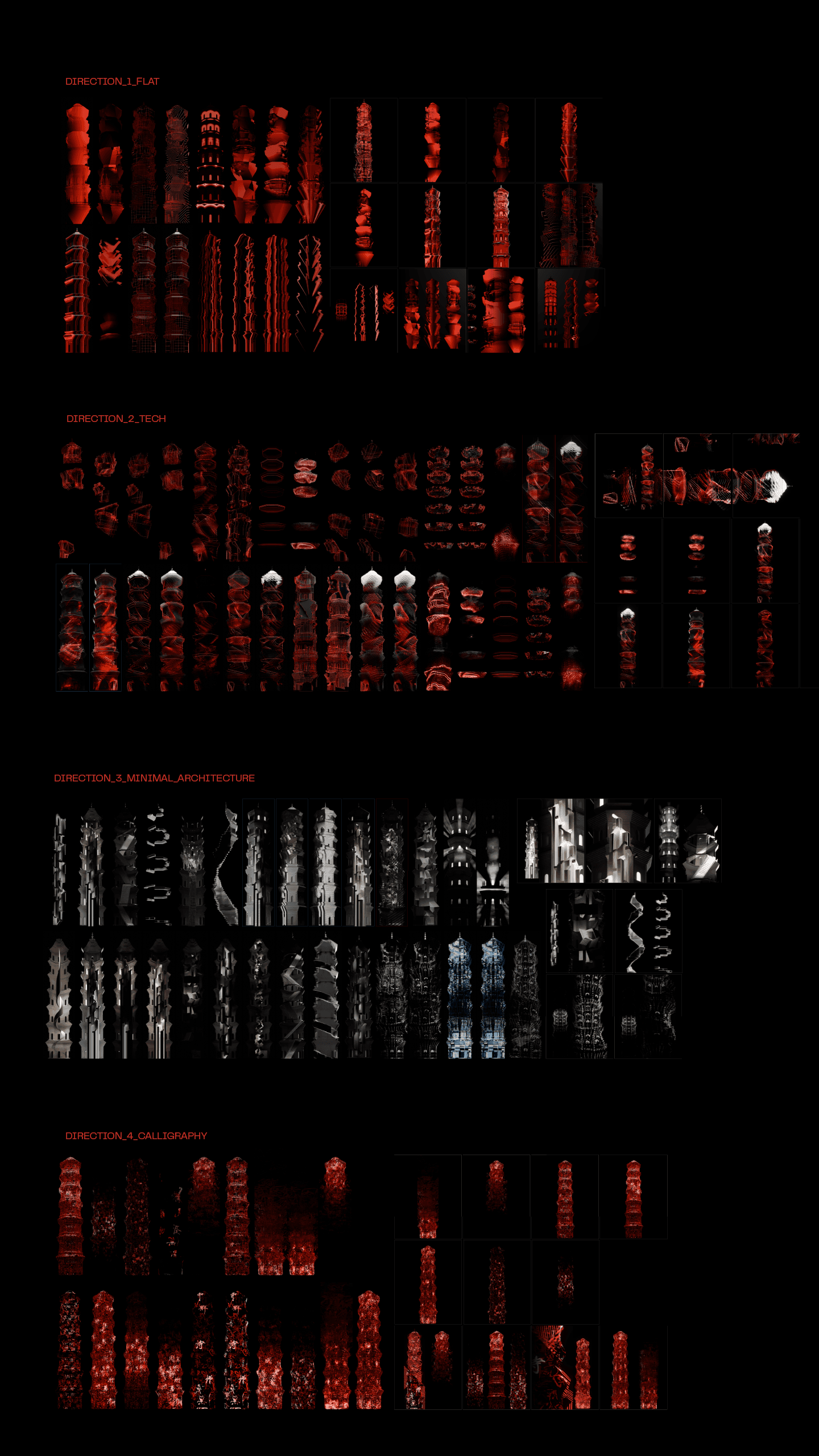
This direction explored a flatter and more minimal visual language.
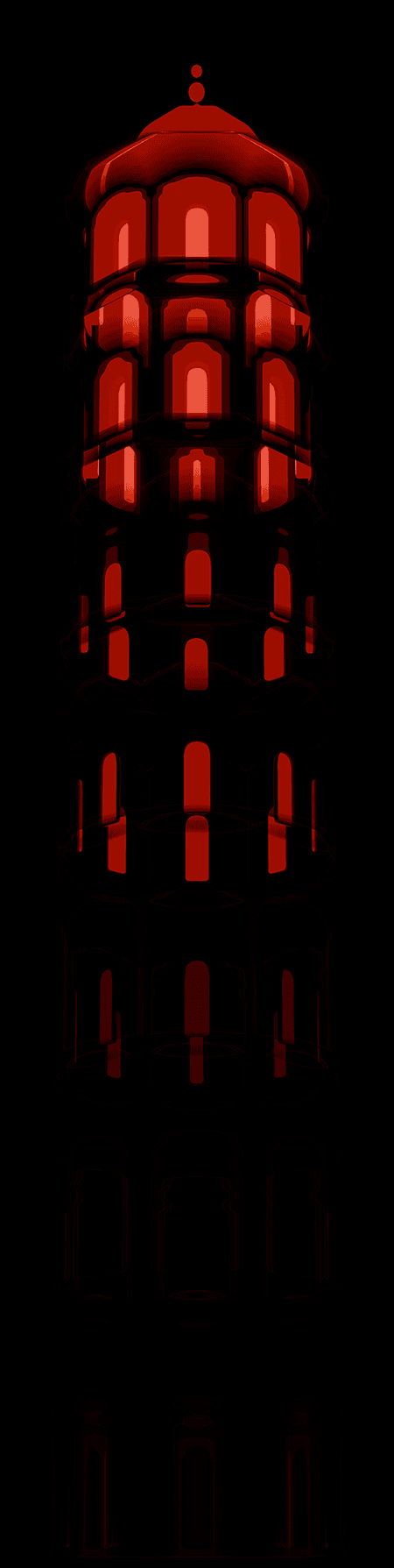
The goal was to leave space for the facade itself — using gradients and simplified forms rather than fully built surfaces. By avoiding over-detailing, the structure of the tower could remain visible and guide the motion.
The first step was to define a clear architectural approach. We began by examining the tower’s proportions and asking how its form could be reinterpreted rather than simply illustrated.
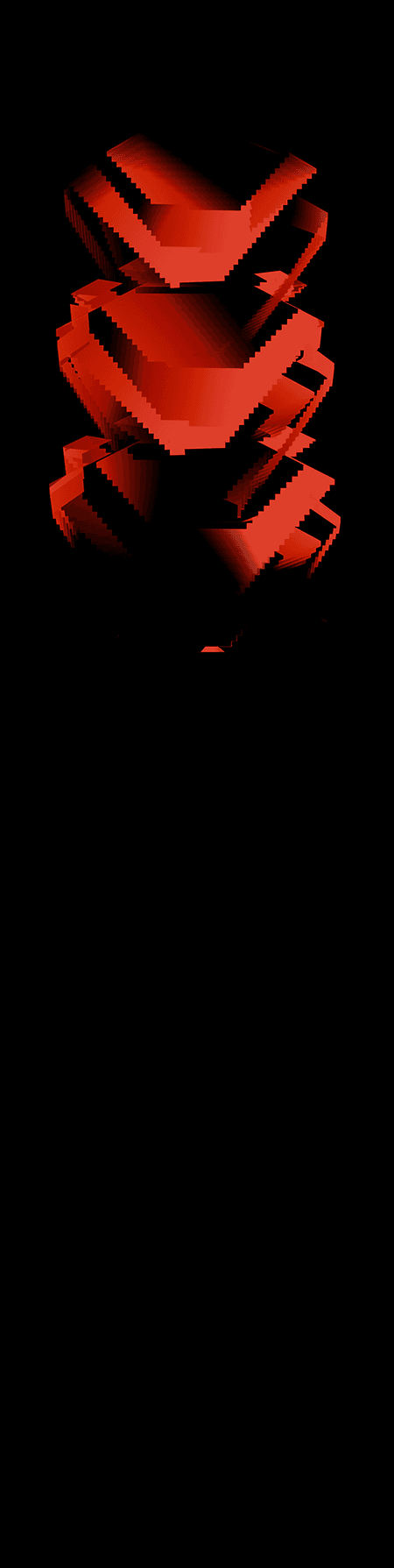
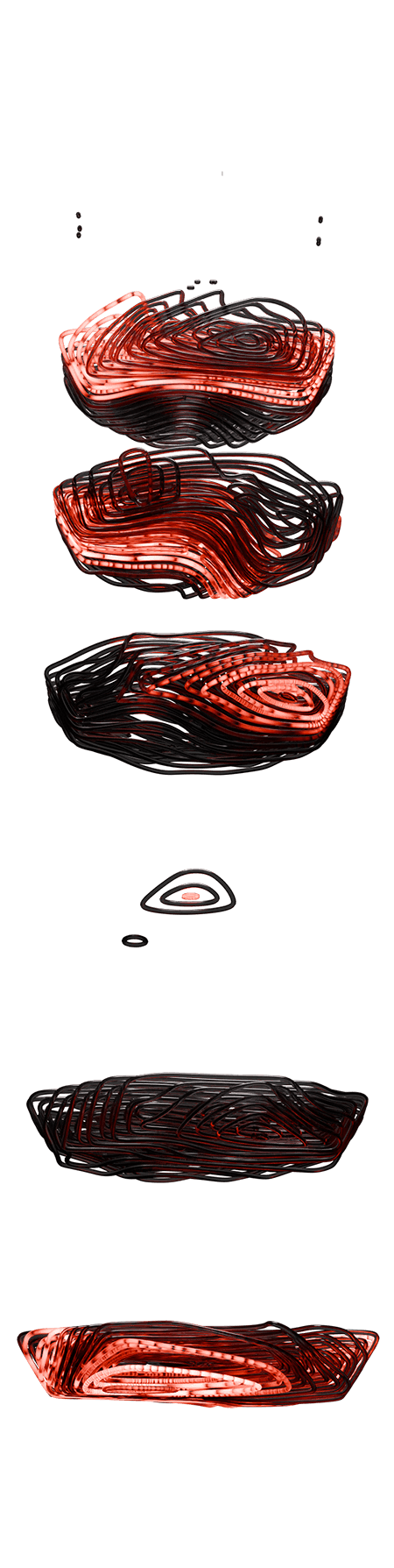
By studying the stair rings between each floor, we imagined them continuing inward—forming hidden diamond-shaped volumes that are not normally visible from the outside. This led to a conceptual transformation of the tower into a series of inverted geometric forms, giving us a foundation to work with both shape and motion.
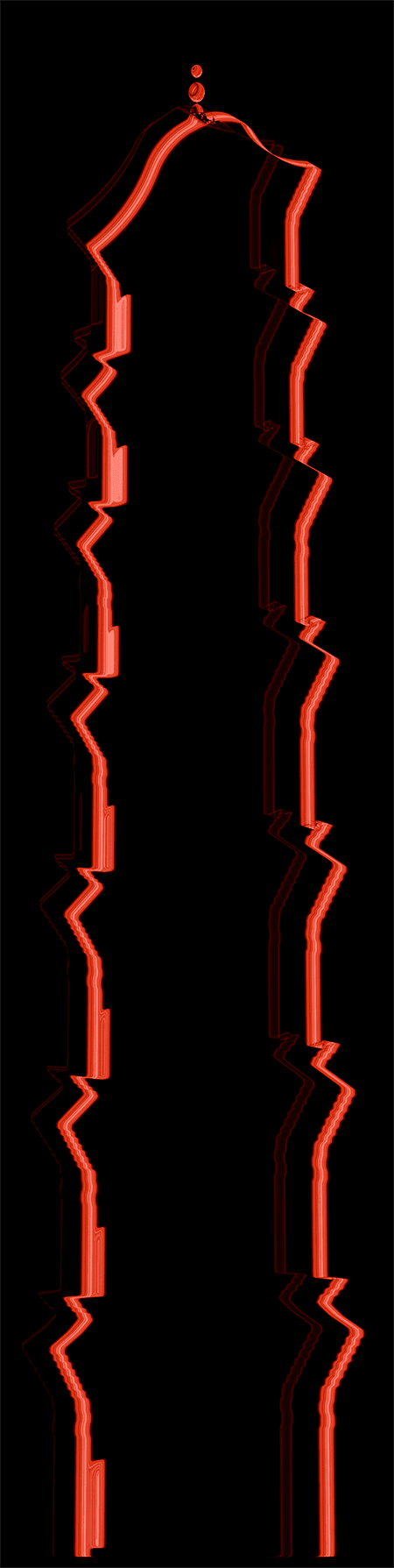
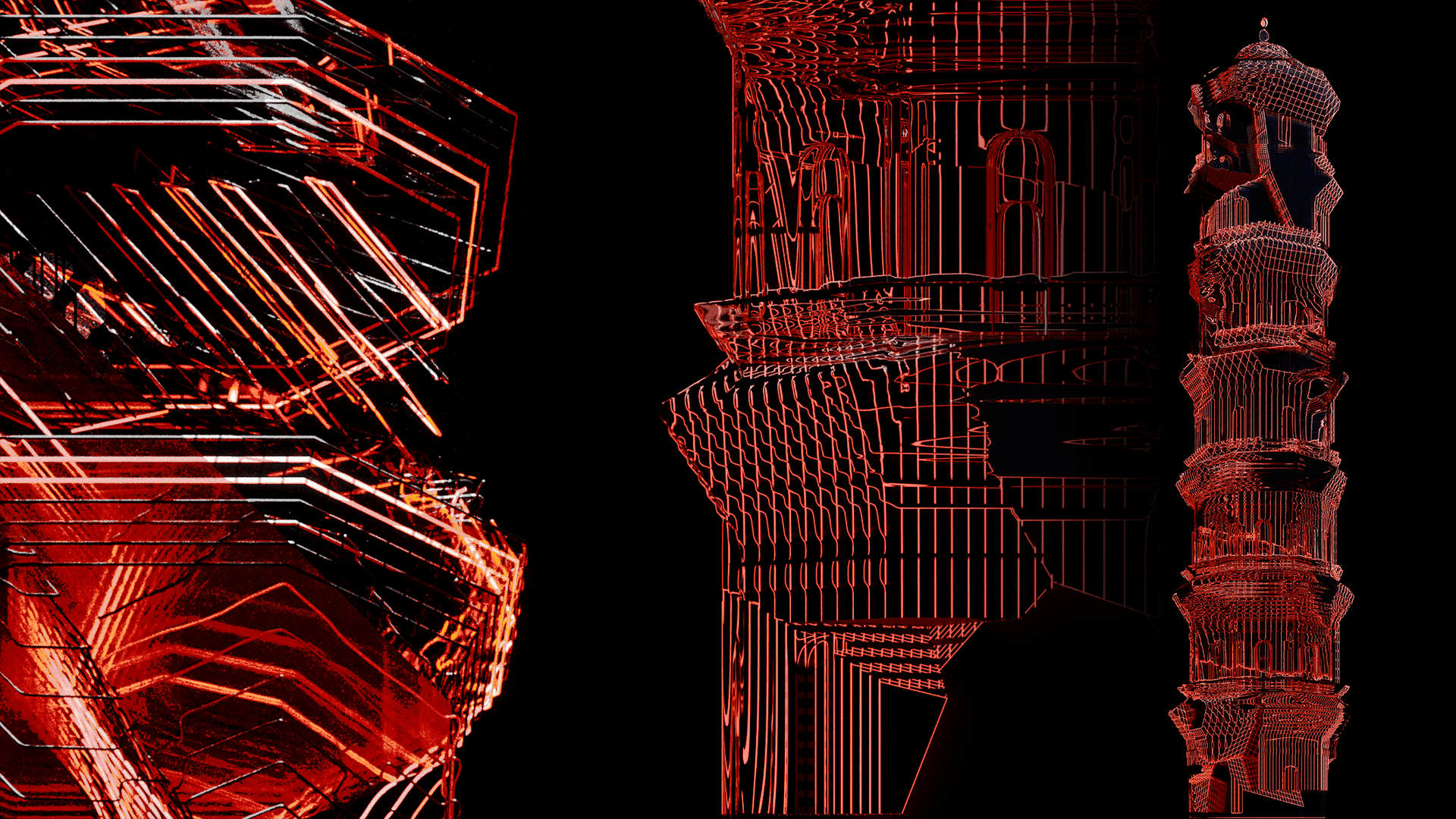
One of the key methods used throughout the project is a distortion technique built specifically for projection mapping. By duplicating the tower and placing a second one made of glass in front of it, we could drive the IOR with noise and distort the visuals according to the real geometry beneath.
This allowed minimal visuals to inherit architectural character—making them react to the tower without manually designing architectural effects. It turned flat motion into projection-aware motion, and became a reliable way to align simplicity with structure.
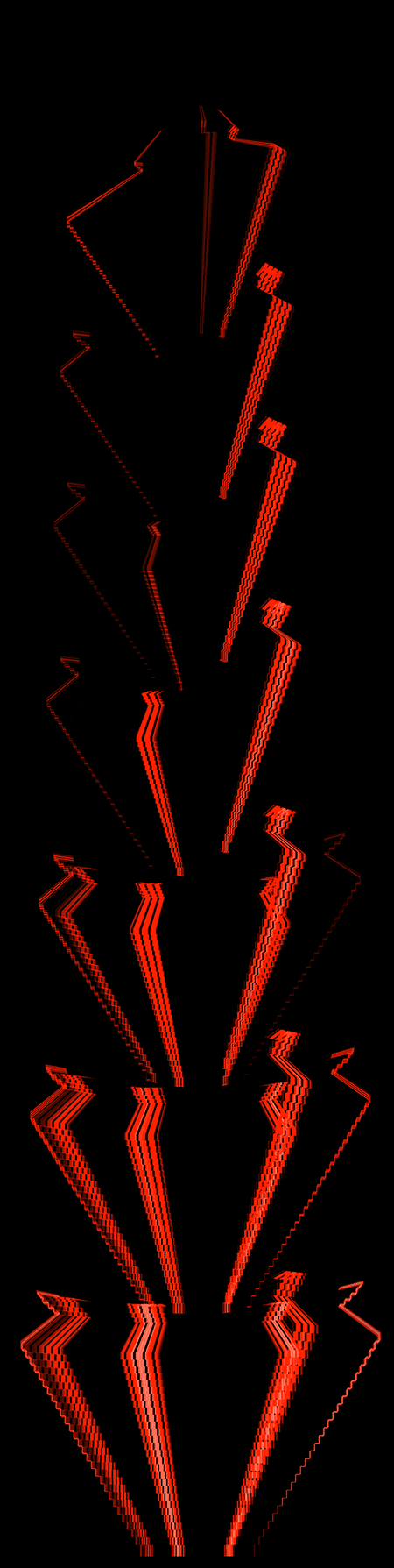
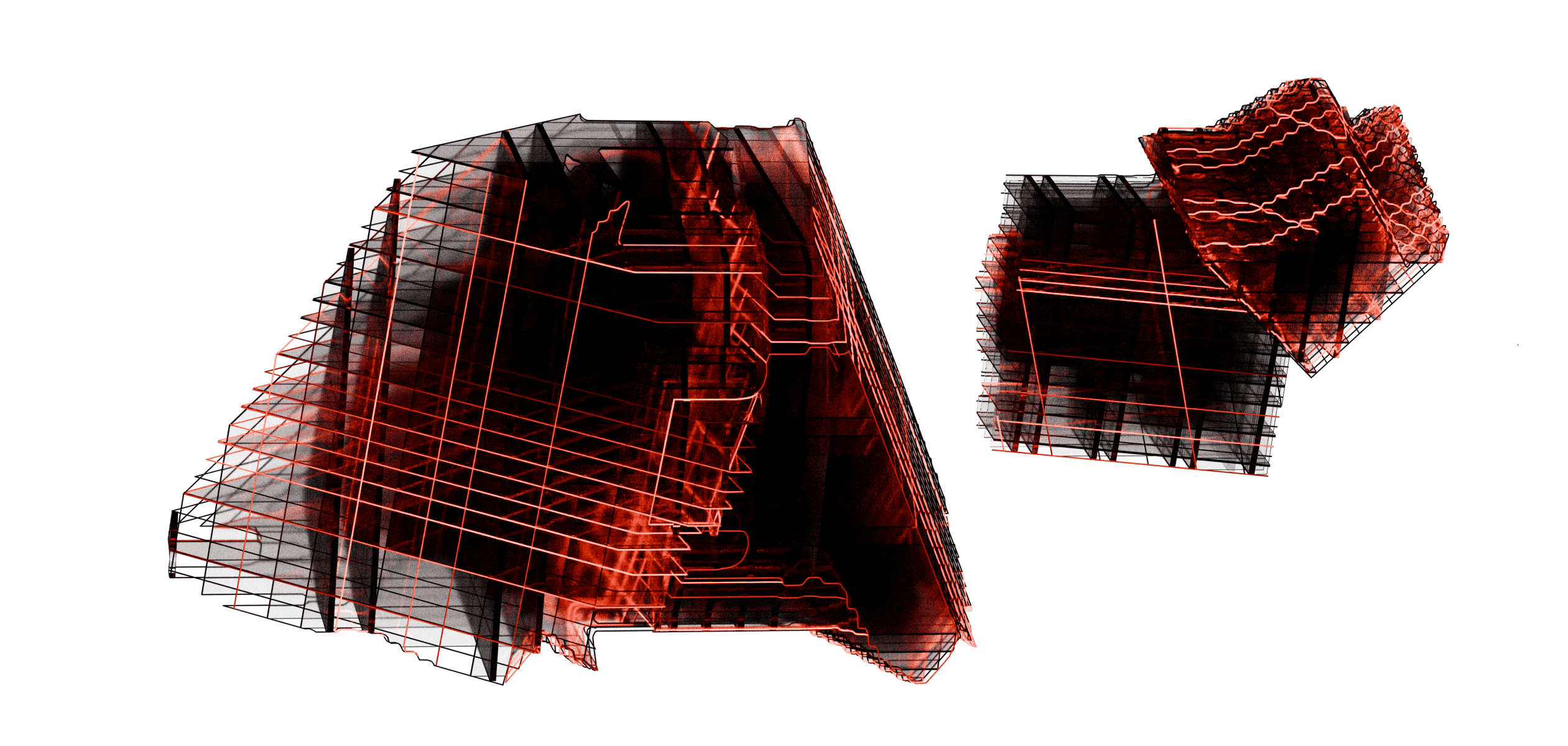
To reveal the building’s form in a simplified way, different cross-sectional vectors were used to drive procedural noise across the geometry.
This allowed us to read the tower’s structure and describe how space intersects with the volume. A subtle roughness variation was then added to increase fidelity and prevent the image from feeling flat once projected.
Some of the early outputs were later repurposed as transition material.
This added flexibility during montage and allowed coherent visual business to be achieved in case the pacing required it. Those effects do not cover the whole facade. Instead they just “go through”, allowing for multiple things to take place at once
02_Tech-INSPIRED
After defining a minimal visual base in Direction_1, the next step was to introduce a layer with higher fidelity and clearer structure.
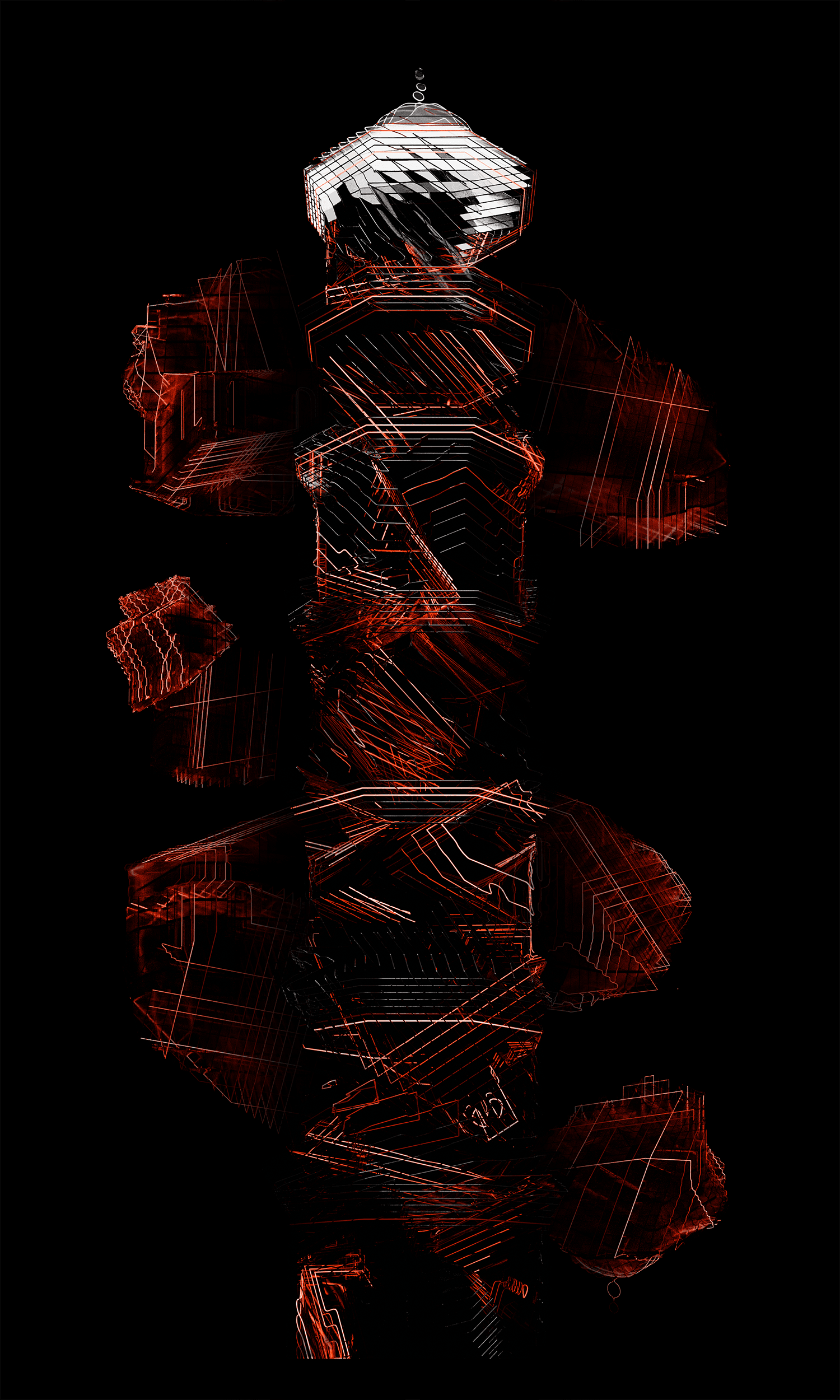
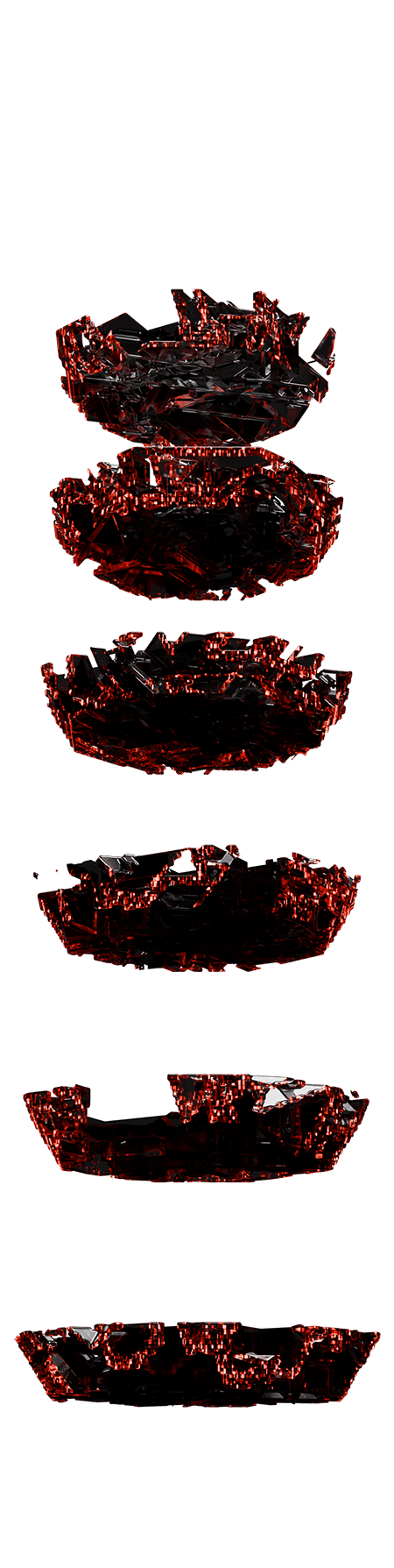
The intention wasn’t to replace the simplicity but to contrast it—adding sharper forms, precise motion, and a more technological tone. Geometric patterns were generated on the base of slicing chunks in different orientations, with focus on communicating the form. This contrast helped build rhythm across the montage while still keeping alignment with the projection surface.
To verify how the content would perform on the real structure, virtual projection tests were occasionally done inside the 3D model of the tower. The building was kept unlit and a projector light was used to cast the rendered visuals onto its surface. This helped evaluate readability, scaling, and how well the motion aligned with the facade before moving to final production.
To add depth and contrast to the cylindrical silhouette, the same system was selectively applied only to the stair rings. This isolated the lower part of each floor, revealing more structure and breaking the uniform profile while keeping projection alignment intact.
Existing procedural systems from earlier projects were adapted to the tower’s geometry and tested directly on the facade.
This allowed for rapid exploration while keeping every result consistent with the building — using previous work as a foundation rather than starting from zero.
03_sTAIRS
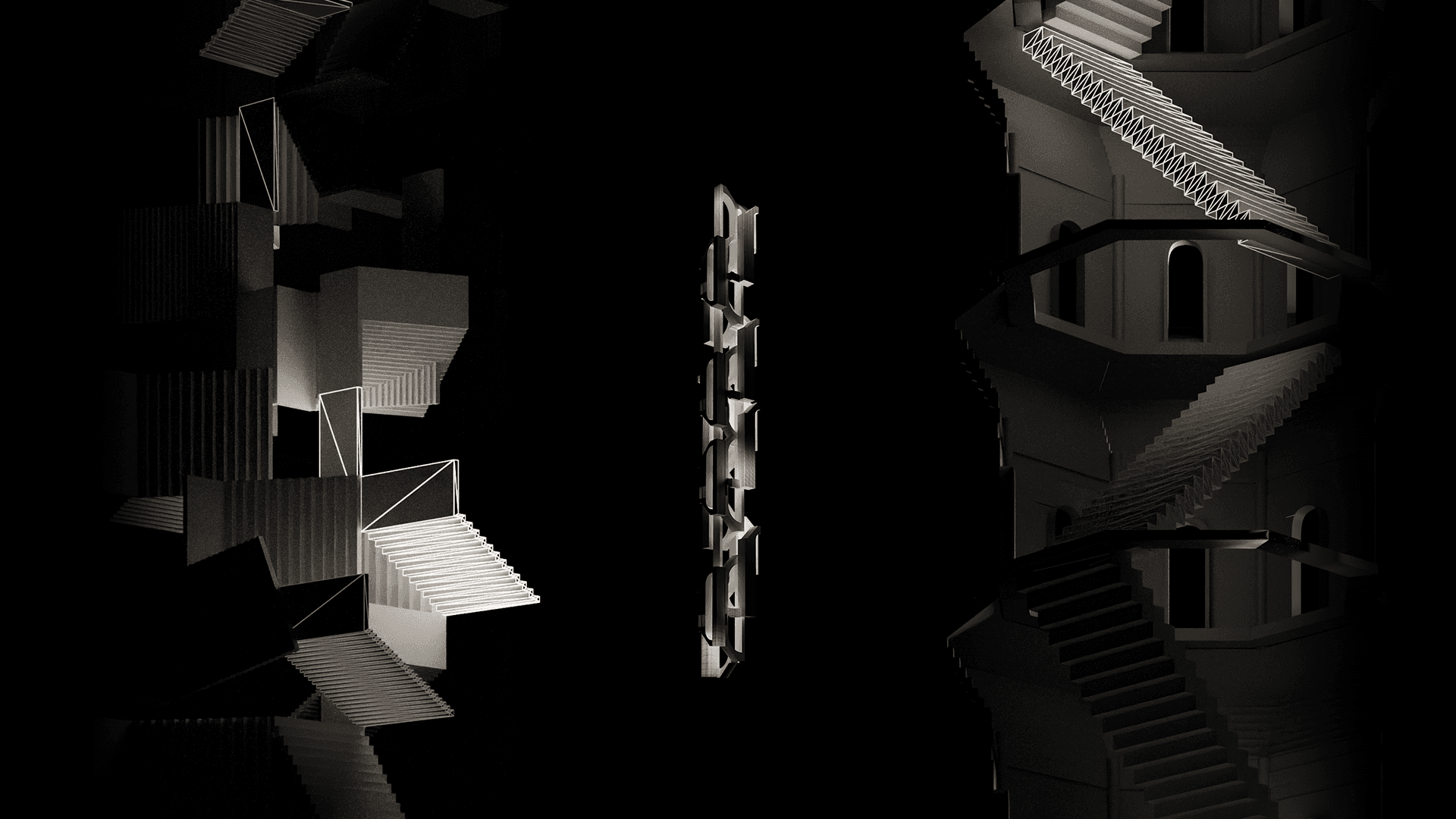
One of the requested directions explored a more minimal, architectural language — using interior space as the main visual device. Escher-inspired stair structures were used as symbolic references to cultural themes while creating optical ambiguity: sometimes the viewer sees the facade, other times the inside of the tower.
04_Calligraphy
One of the key criteria of the contest was cultural relevance.
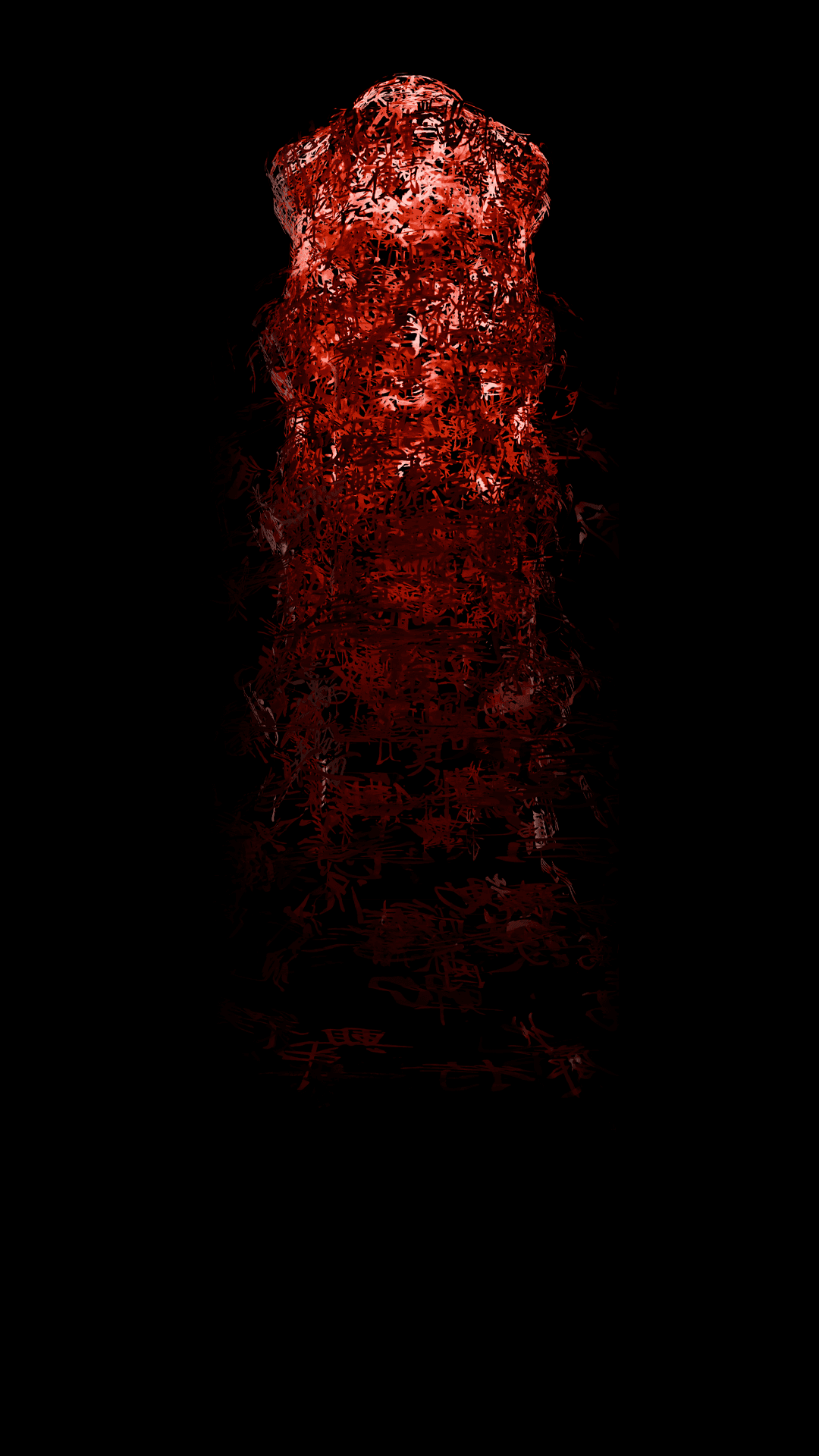
For this direction, historic Chinese calligraphy was treated as abstract material — not as a graphic layer, but as a structural element that wraps around the tower. The symbols were fragmented, repeated and deformed to feel like they belong to the facade itself rather than placed on top of it. By treating the typography as geometry, the visuals stay respectful to the source while creating a distinct motion language grounded in the building.
05 — Process Overview
Procedural workflow made the R&D phase efficient by keeping the cost of iteration low. At the start of a project we know the direction, but not the final form — so speed and capacity to test variations become critical.
Systems were adapted to the tower’s geometry, previous setups were repurposed, and four GPUs handled rendering in parallel. This allowed ideas to be tried, validated, or discarded within hours — keeping momentum high and decision-making clear.
Quality came from structured variation rather than chance. The visuals weren’t experiments — they were controlled searches for what fit the building, the brief, and the emotional arc of the show. When iteration is affordable, discovery becomes part of the method — not a risk.