Nature in Code - a ten minute meditation on nature and technology, built for the opening of Videnie, Sofia's first immersive space.
Roots growing across the floor. Cables threading through them. Natural objects dissolving into digital mist. A single arc through the room — forming, threading, dissolving, settling.
The launch drew local press coverage as a cultural opening for Sofia's developing digital-art scene.
Client
Videnie Space
Services
3D Design
Content Creation
Motion Design
Year
2025
Tools
Blender
Da Vinci
Houdini

00_Project overview
Event work in this medium tends to run on stock and assembly: short timelines, one-time installations, content built to resemble the idea fast enough to ship. Yonick comes from CGI advertising, where custom procedural builds are the working method.
The brief was open — nature and technology. Research narrowed it to two ideas with the strongest tension: a dissolution behavior on natural objects, and roots threaded with cables for the meeting point between the two. Both became dedicated procedural systems built from the ground up. The pipeline ran on Blender for pace; Houdini stepped in where Blender couldn't reach.
Each system was built as a kit. Source assets were designed to be recomposed, varied, and animated differently, so a small library populated the room across the full ten minutes without repeating itself.


01_Entanglement
01.1_The_Problem
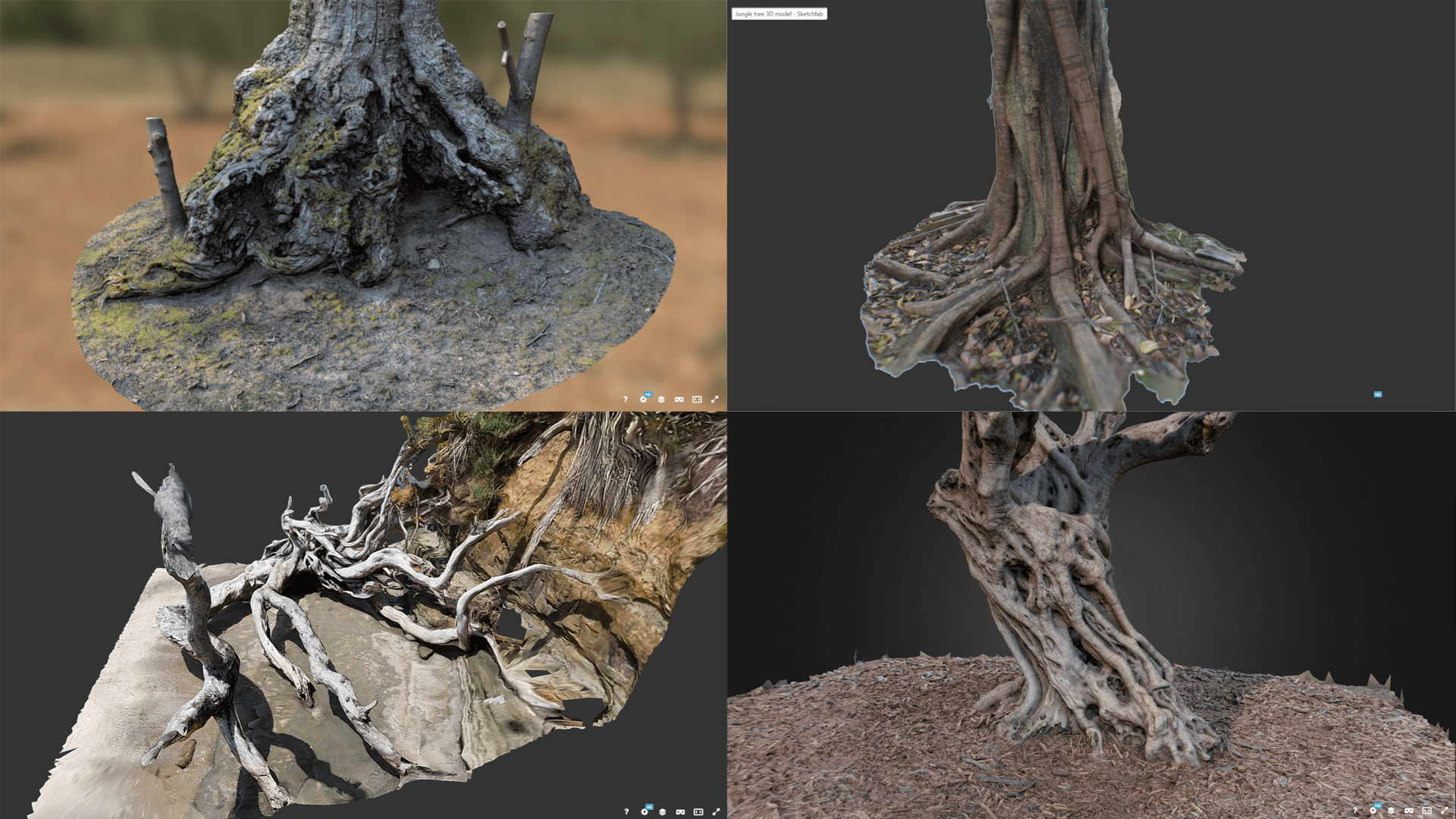
The first plan was to use 3D root scans. Three problems showed up.
The first plan was to use 3D root scans. Three problems showed up.
Each had lighting baked into the geometry, so they read flat when rendered in our scene.
Their shapes were locked, so arranging them across the room would have meant working around the scans, not designing with them.
01.2_The_Goal
The first plan was to use 3D root scans. Three problems showed up.
Each had lighting baked into the geometry, so they read flat when rendered in our scene.
Their shapes were locked, so arranging them across the room would have meant working around the scans, not designing with them.
01.3_The_Solution
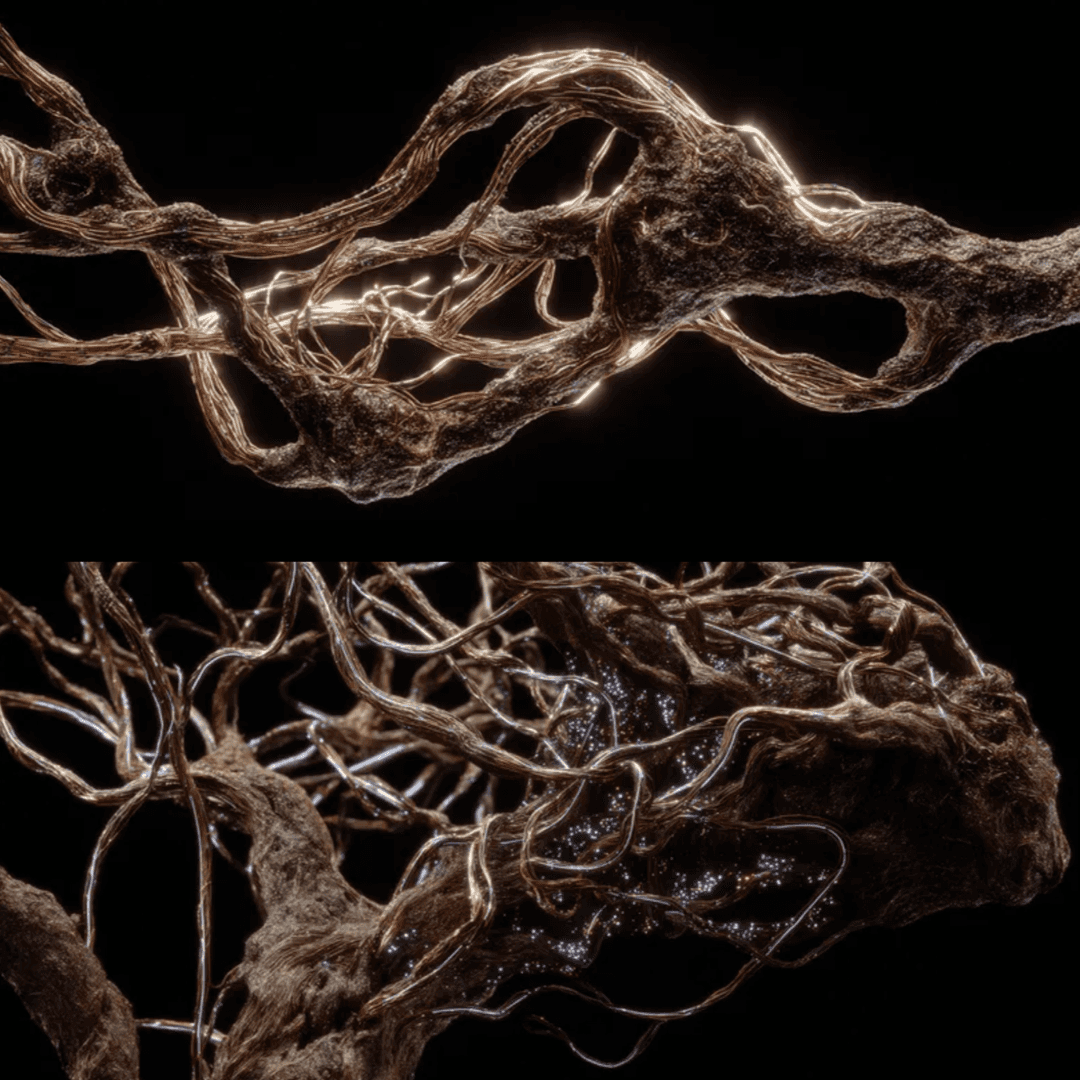
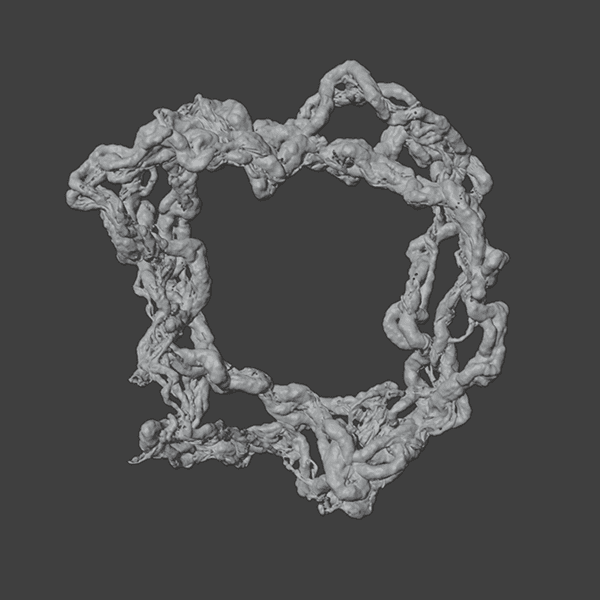
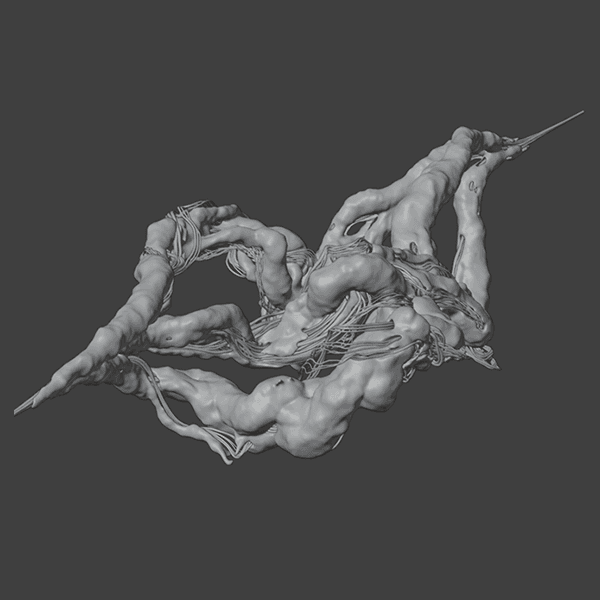
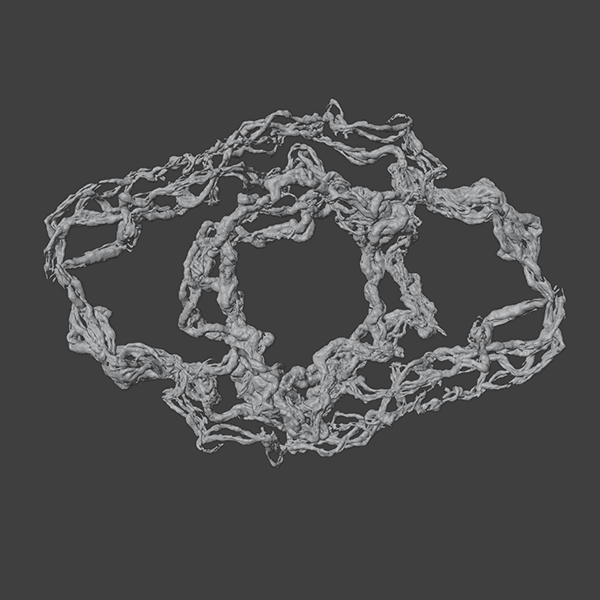
The answer was to build the roots procedurally.
A single system that could be adjusted.
Same character across any shape or size the room needed.
Consistent texture and behavior between every variation.


01.4_Ambience
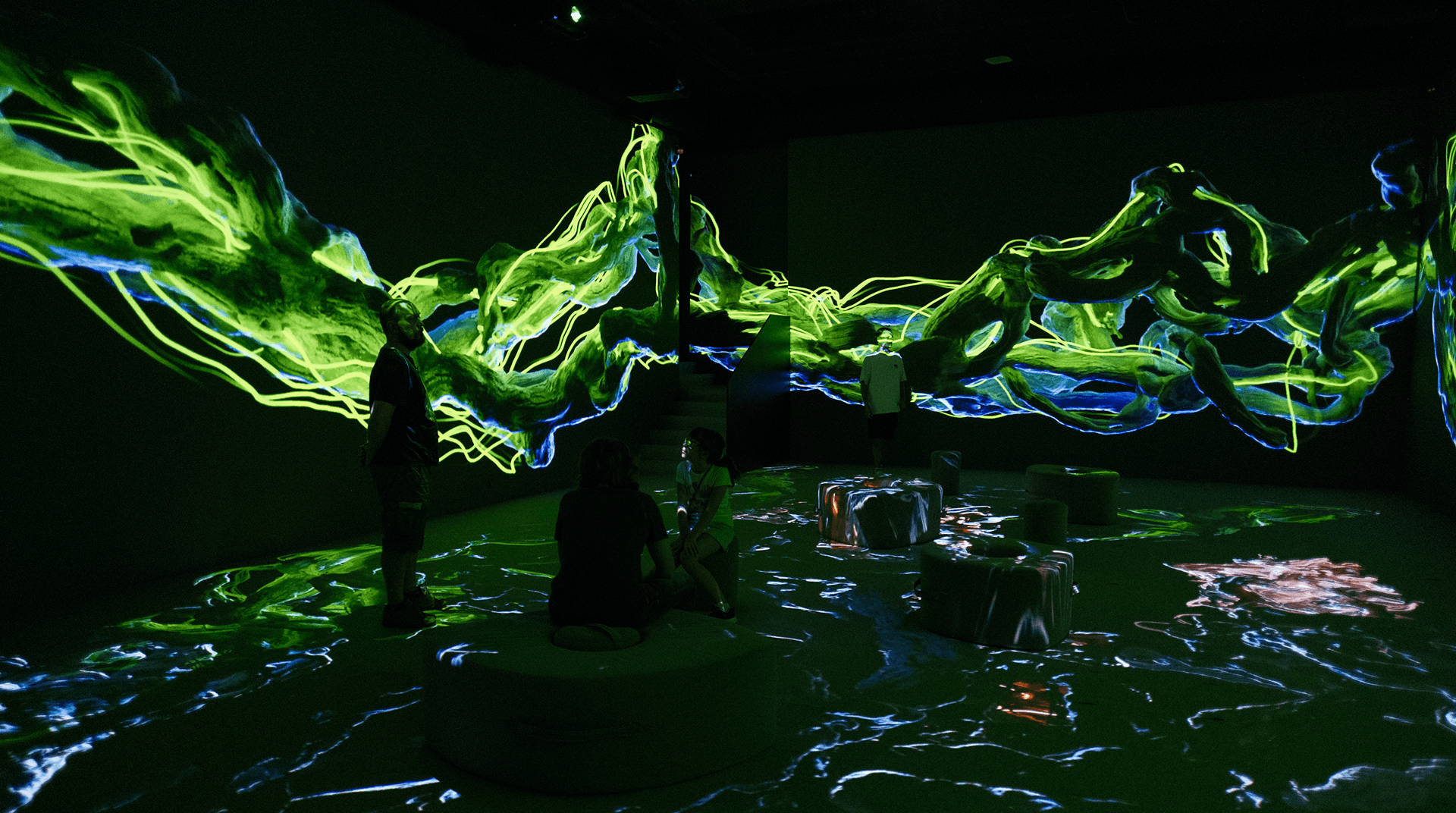
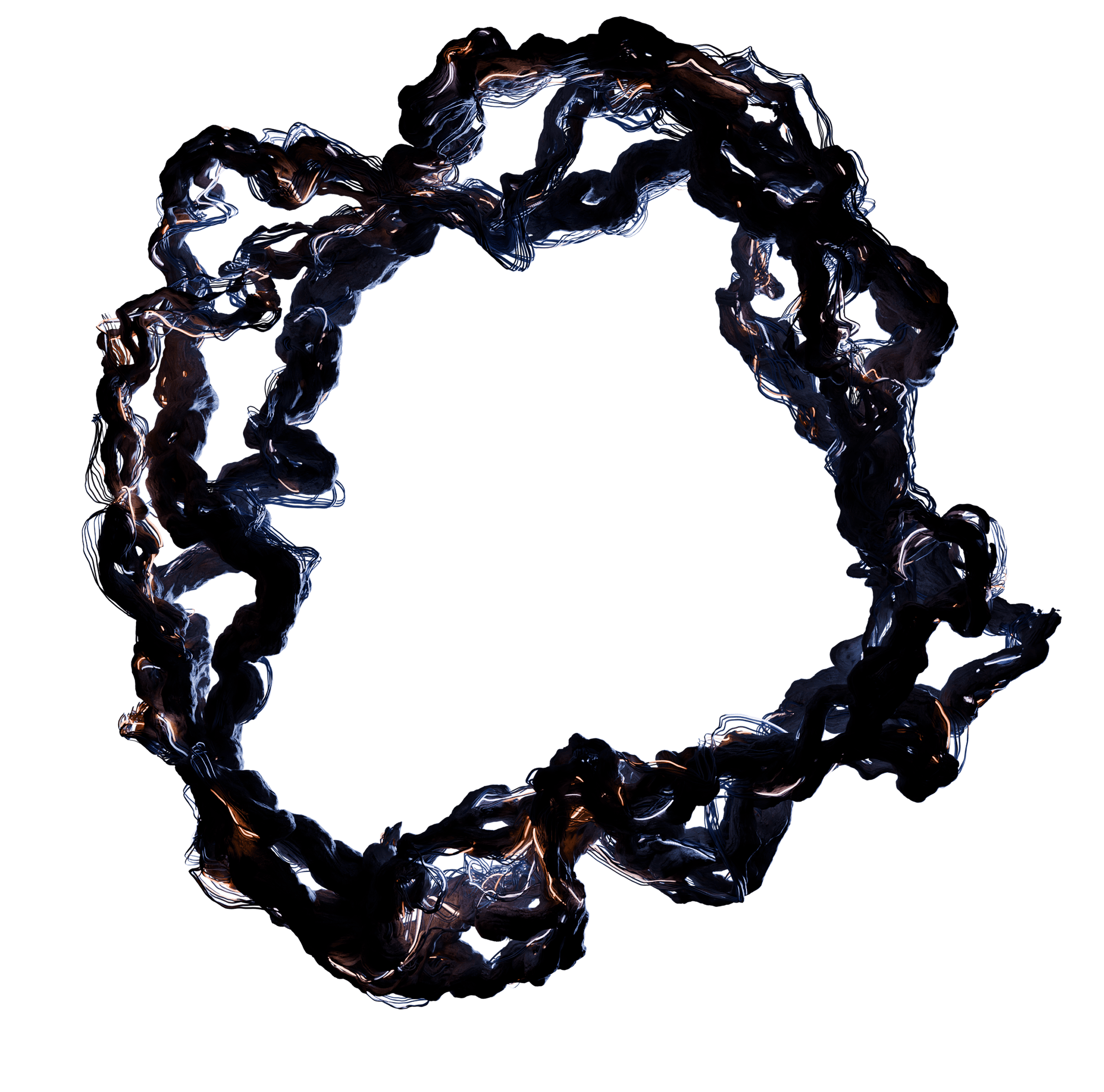
Inside an immersive show, the visuals need to build. The bare roots came first, rendered with revealing rim lights and slow animated loops. Enough movement to feel alive, not enough to call attention. Atmosphere first; the rest would come later.
01.5_Repurposing
The show needed an opening that suggested what was coming without revealing it. Because the system was procedural, the same roots could be rendered again, quieter passes, distant glows - and used as the show's first breath. Intro and main scene came from the same library, played at different volumes.

01.6_Awakening
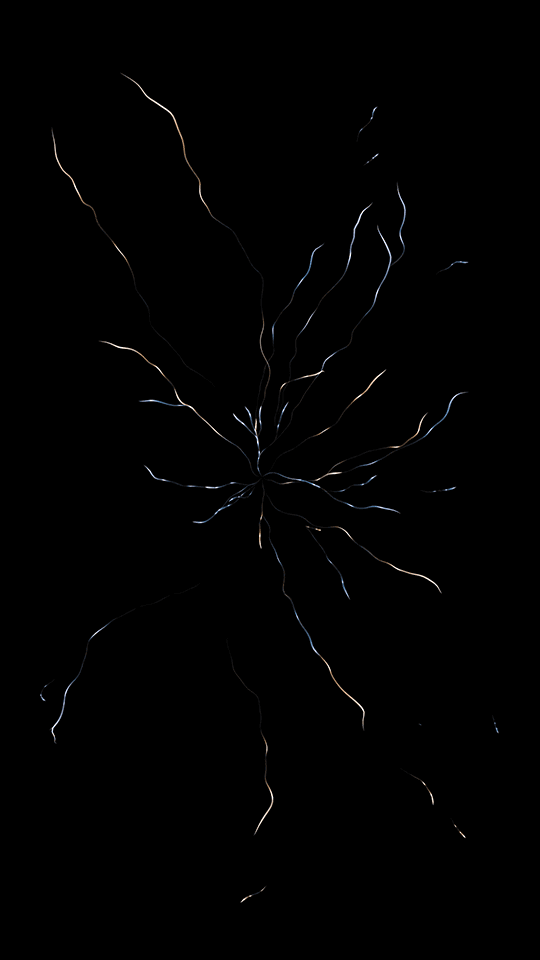
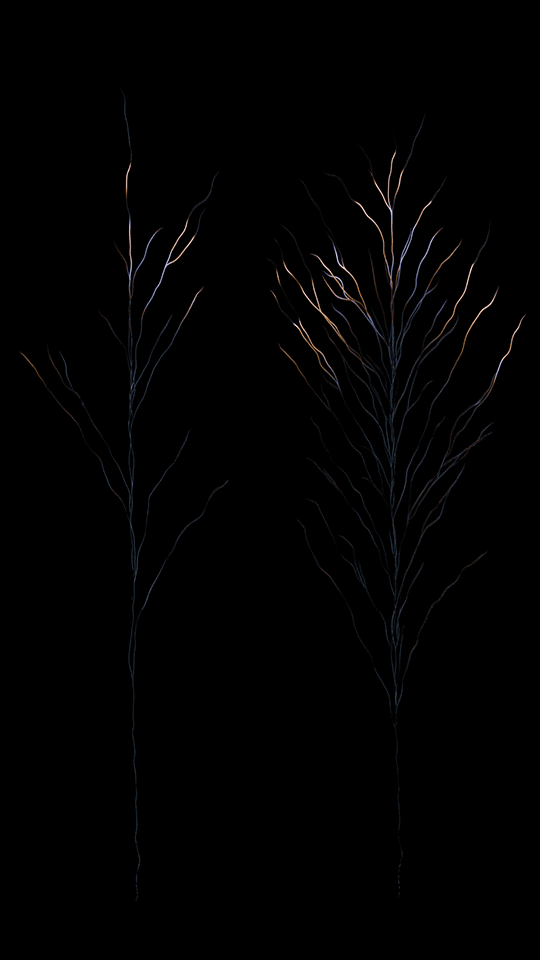
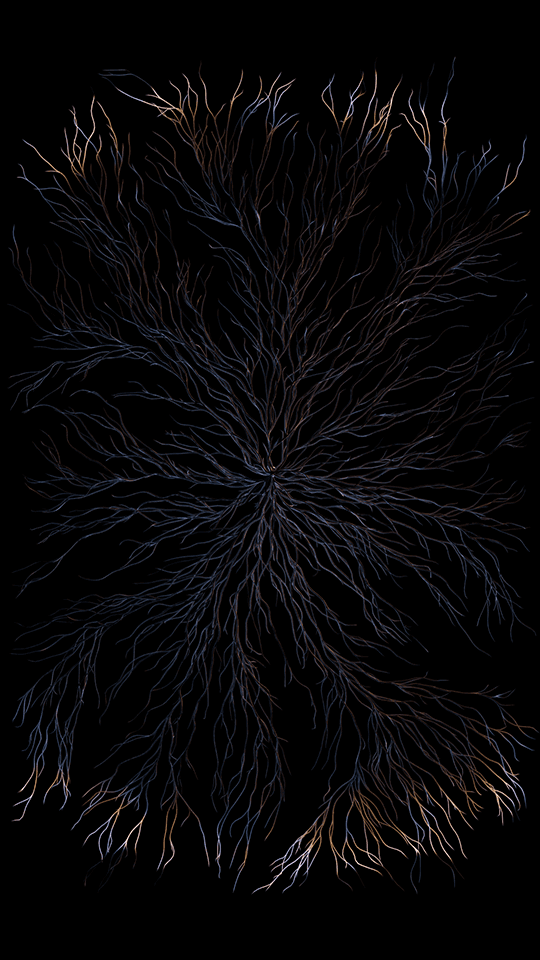
Transformation is one of the strongest tools in motion graphics - change tells the viewer something is about to happen. Two activation effects were built for the roots, both inspired by mycelium: the way a network signals before it spreads. The roots stopped being still and started becoming something else.



01.7_Entanglement
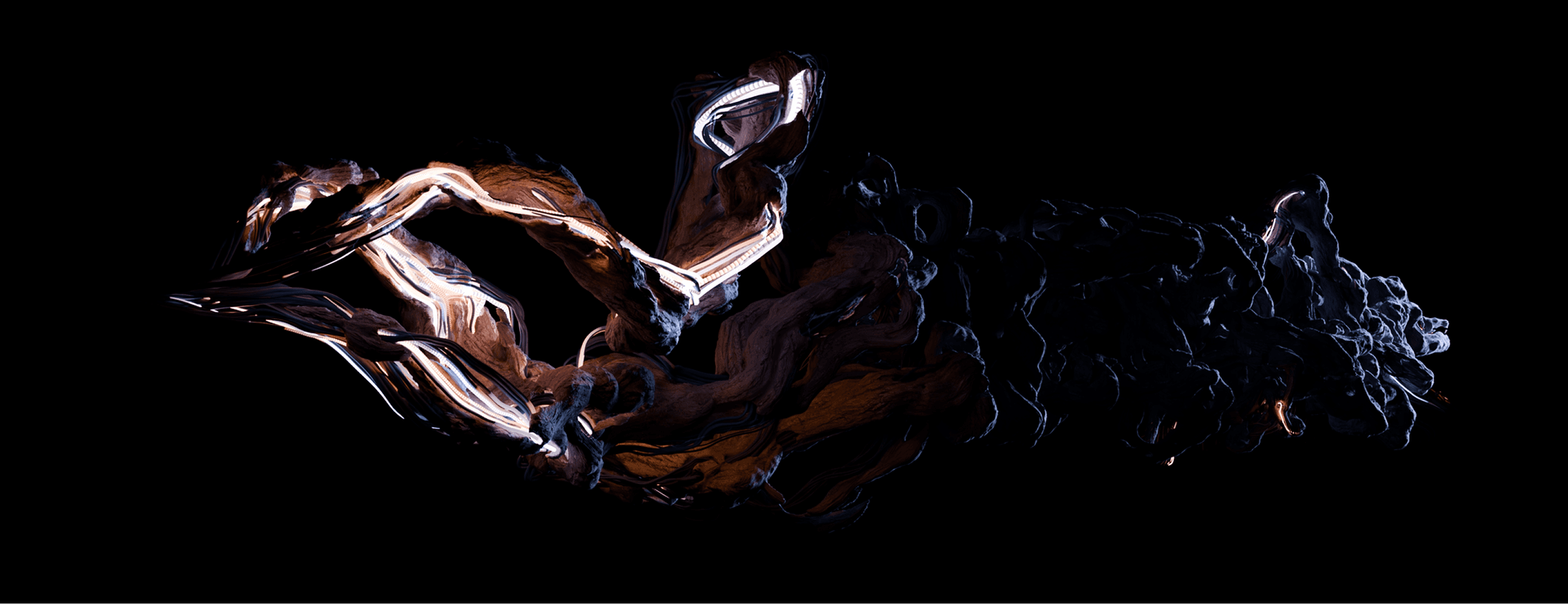
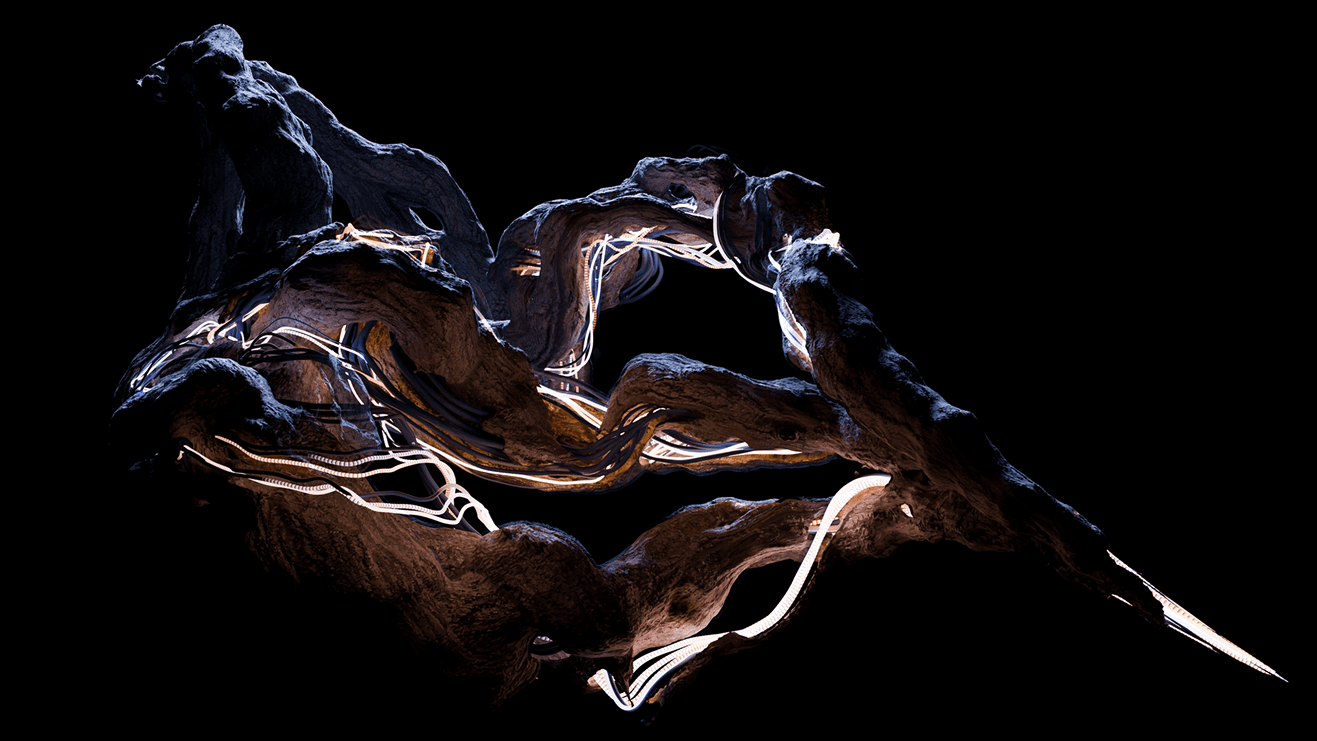
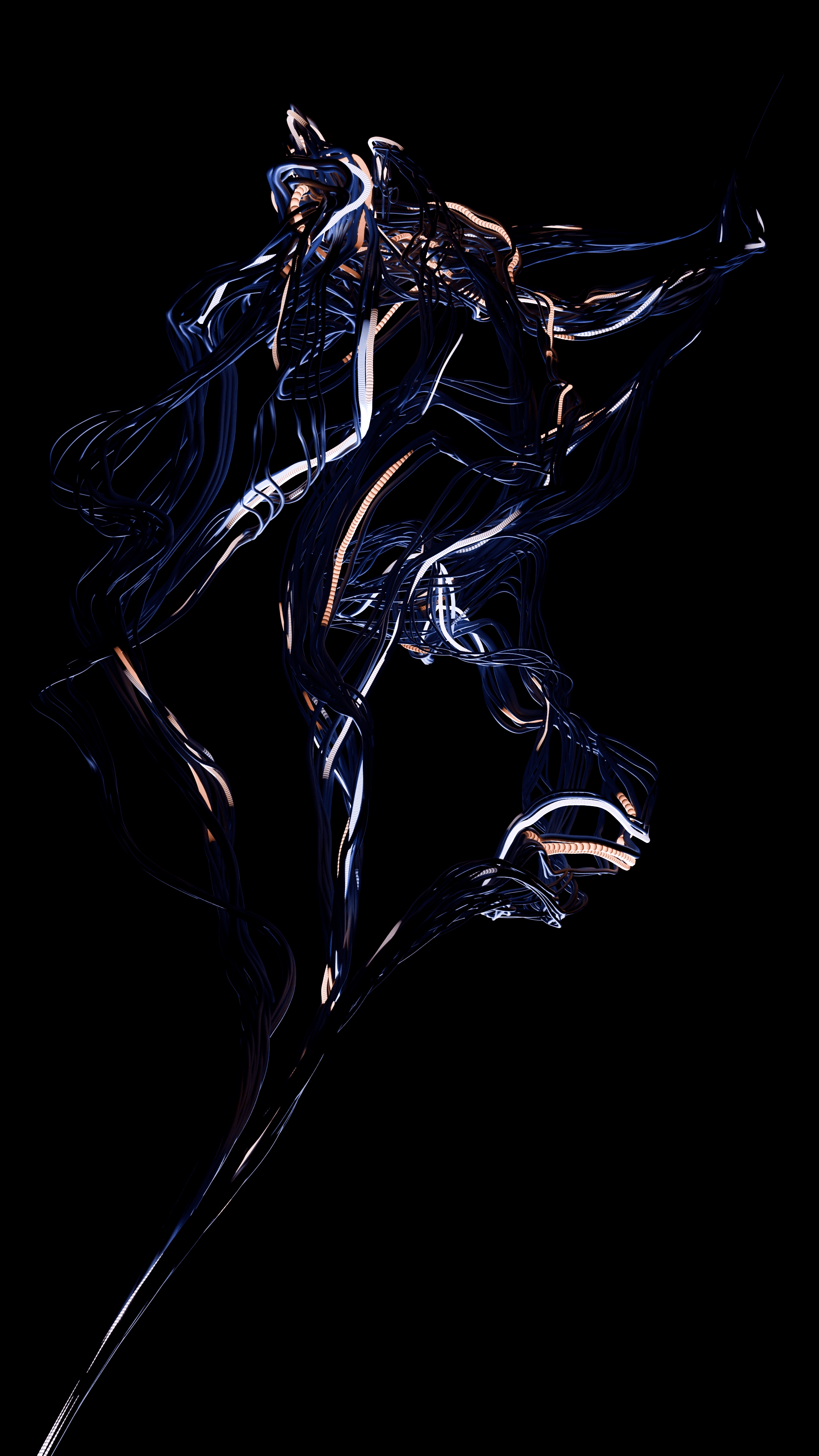
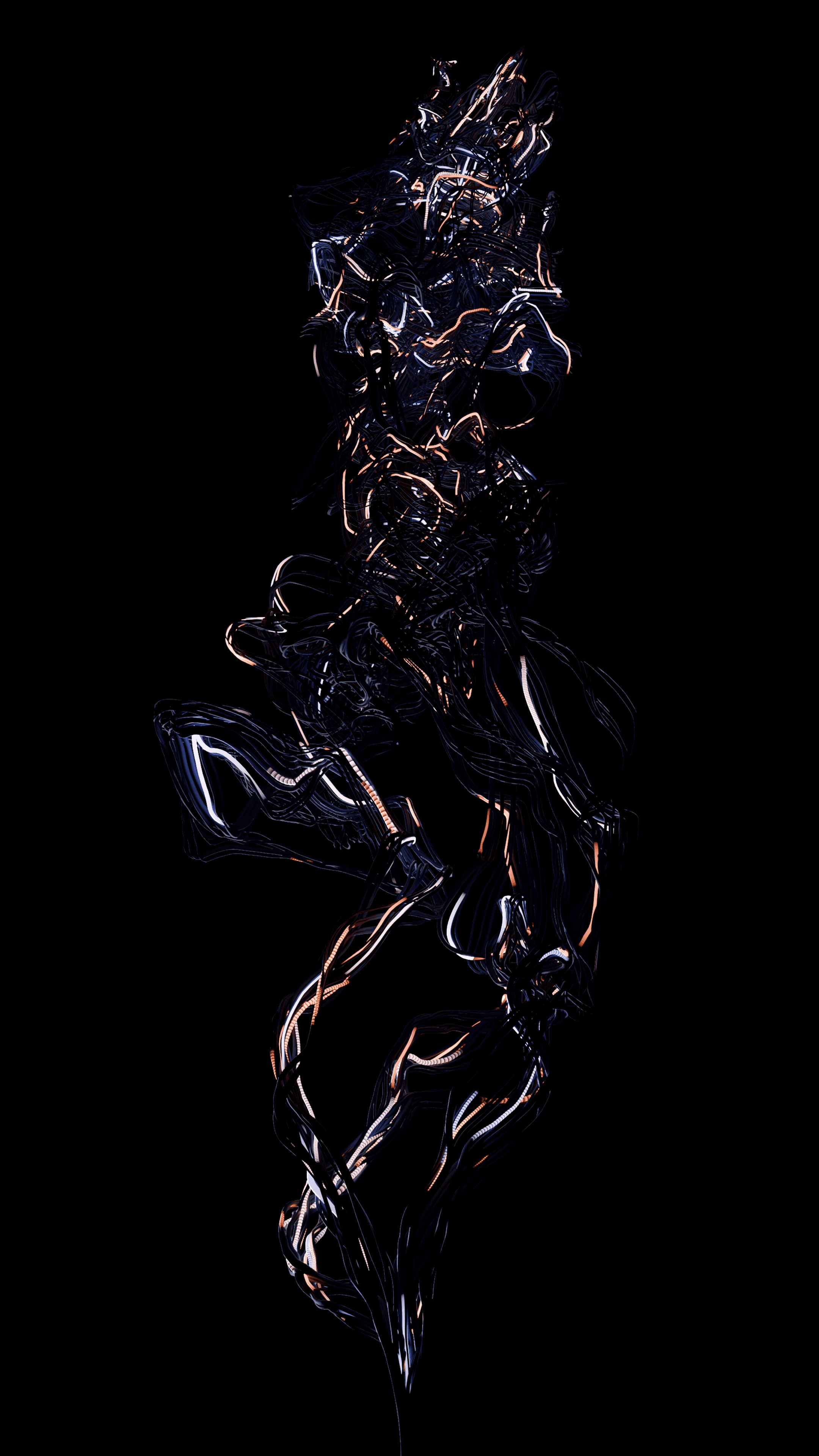
Technology arrived as wires threaded through the roots - a direct image of entanglement, no metaphor needed. The pulses moving along the wires were rendered in several variations, so the section could hold the room's attention without falling into a loop.
01.8_Aftermath
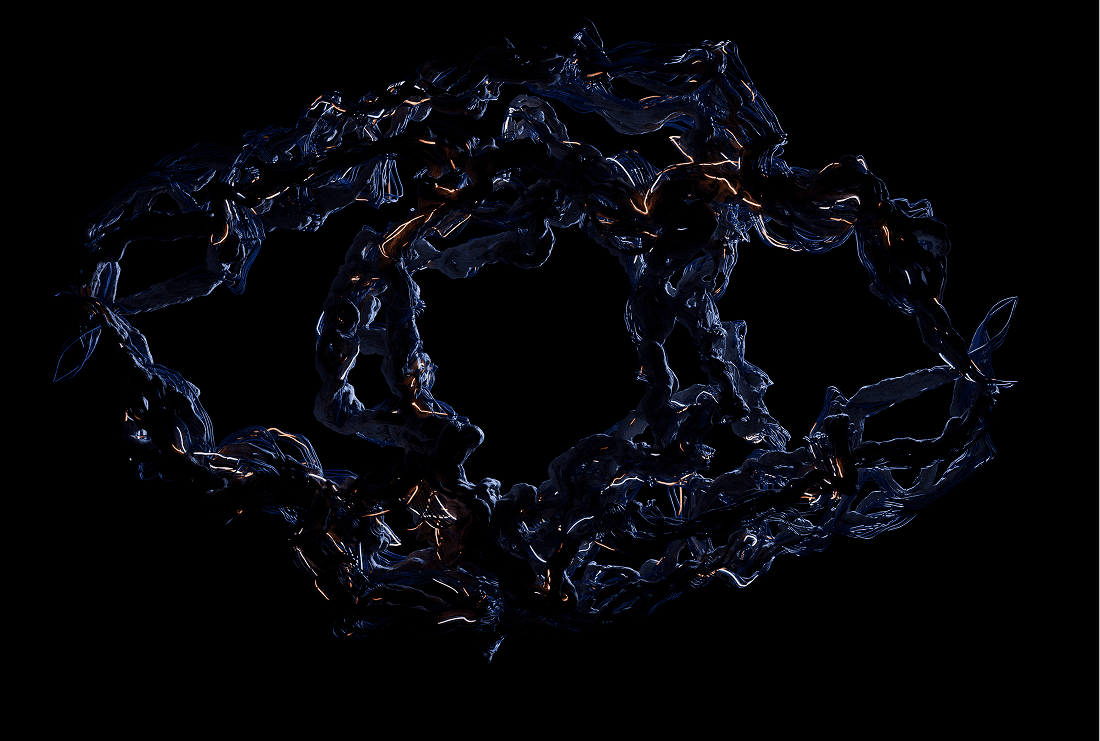
After the entanglement, only the wires remained. The roots dropped away and the technology was left alone - a darker beat in the show, designed to make the room feel uneasy before letting it settle. The wires renders were already there. Once nature and technology had met, removing one was a choice the system already supported.
02_Impostor_Plants


02.1_Setting
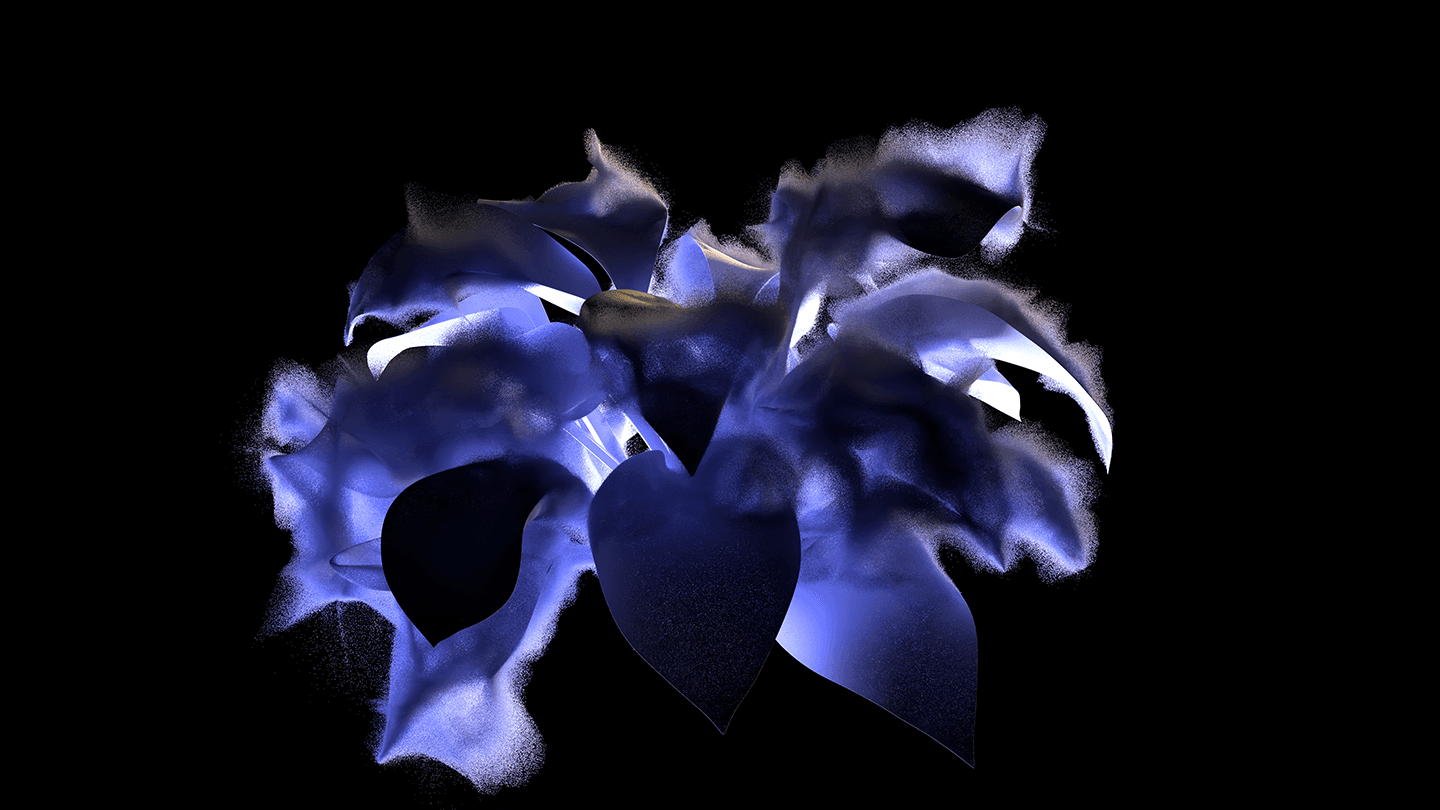
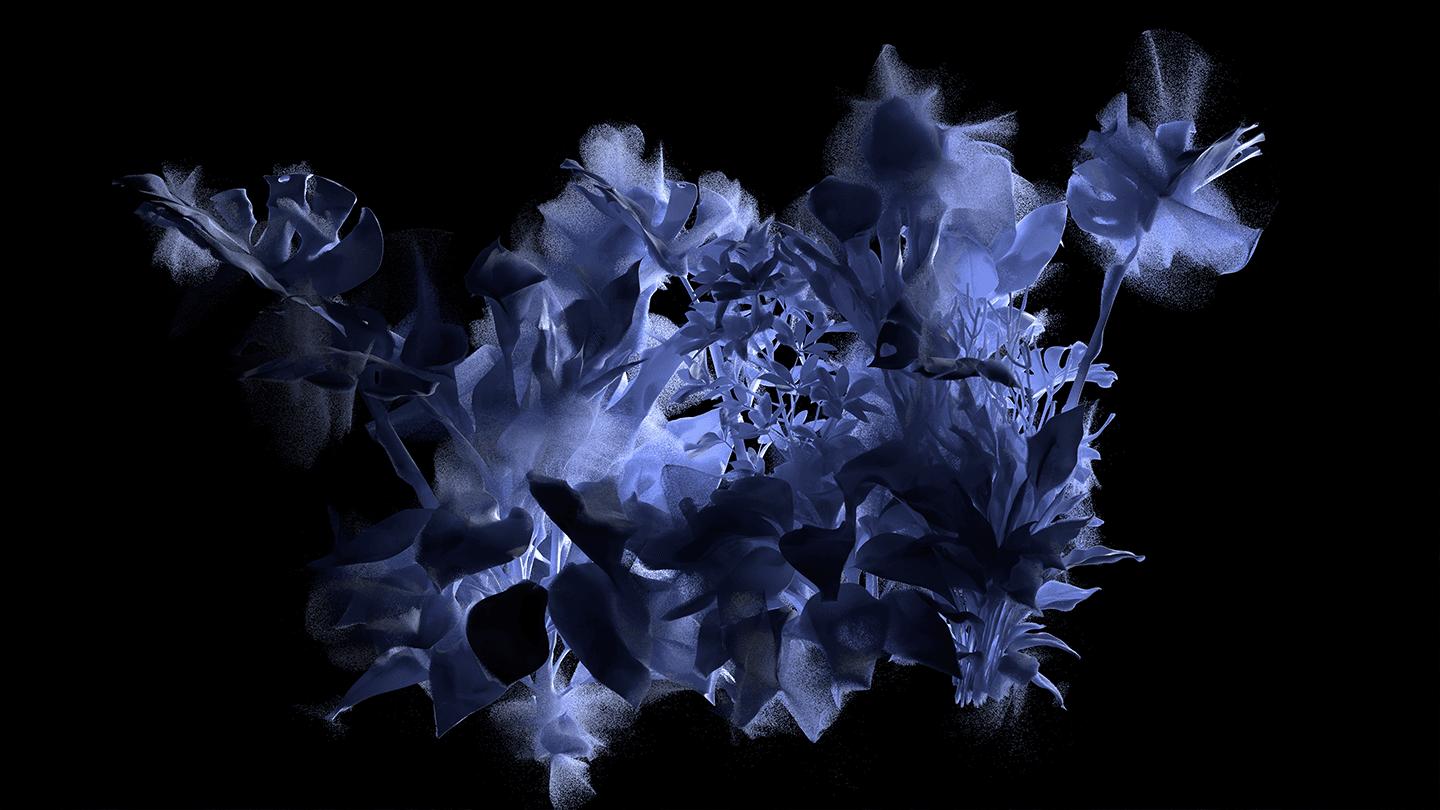
Problem- CGI plant assets read as fake even when the models are good. Human vision is unusually sharp on plants, the result of generations of depending on them. The closer a render tries to look real, the more obvious the imitation becomes. Realism wasn't the right target.
Goal- A beautiful interplay between nature and technology, without the realism battle. The visuals needed to work because they were stylized, not despite being stylized. Something the room could read at a glance as both organic and constructed.
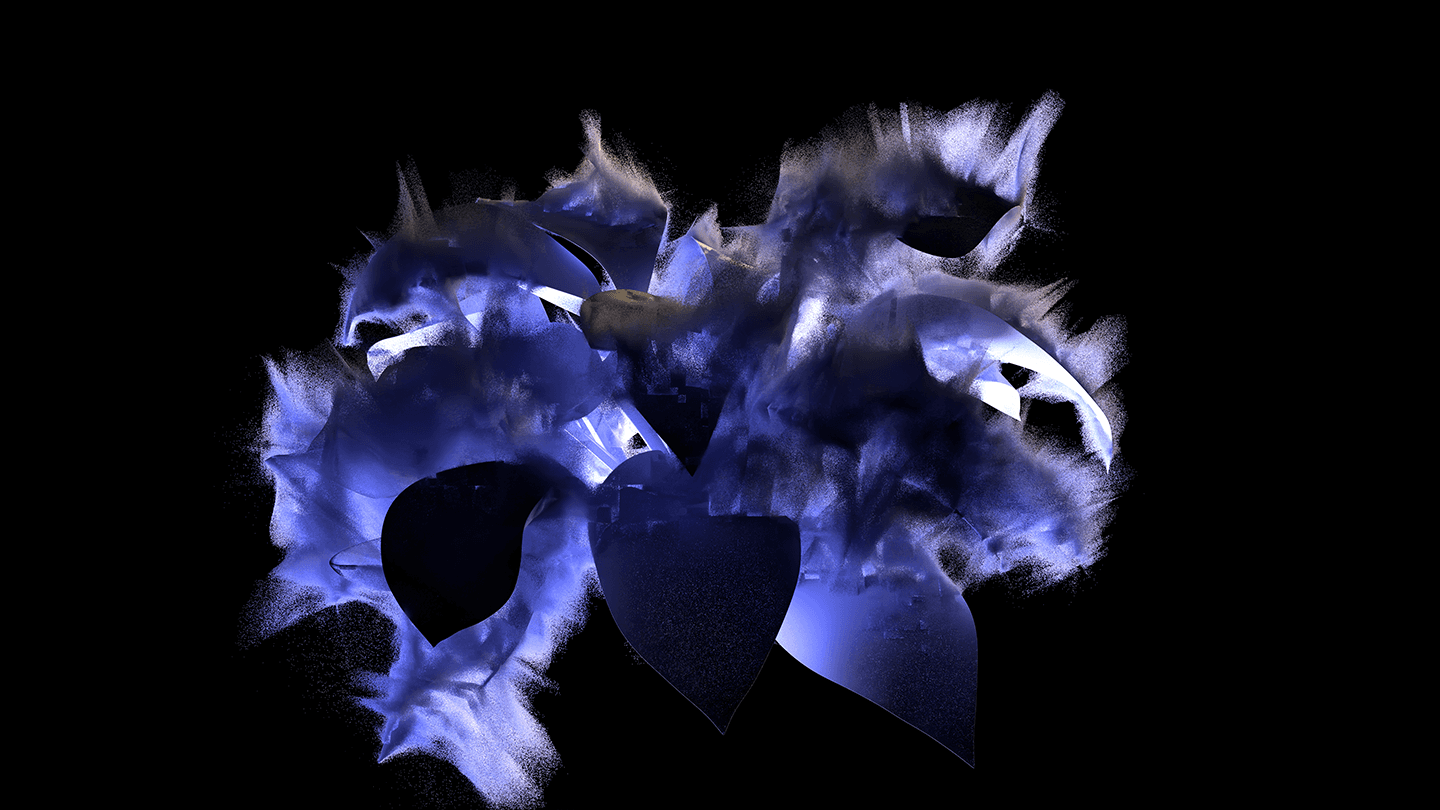
Solution- Embrace the stylization. Use the dissolution itself to bring intricacy and inner logic to objects that were intentionally flat. The mask driving the dissolve carried the structure the flat shading deliberately didn't. What emerged was technology pretending to be nature, revealed in the act of breaking down.
02.2_Techno_Reinforcement
A spatial checker texture was mixed into the dissolution mask. It communicates the technical nature of the objects and reinforces their reading as technical at origin. A hologram, rather than a plant.

03.5_Architectural_Integration
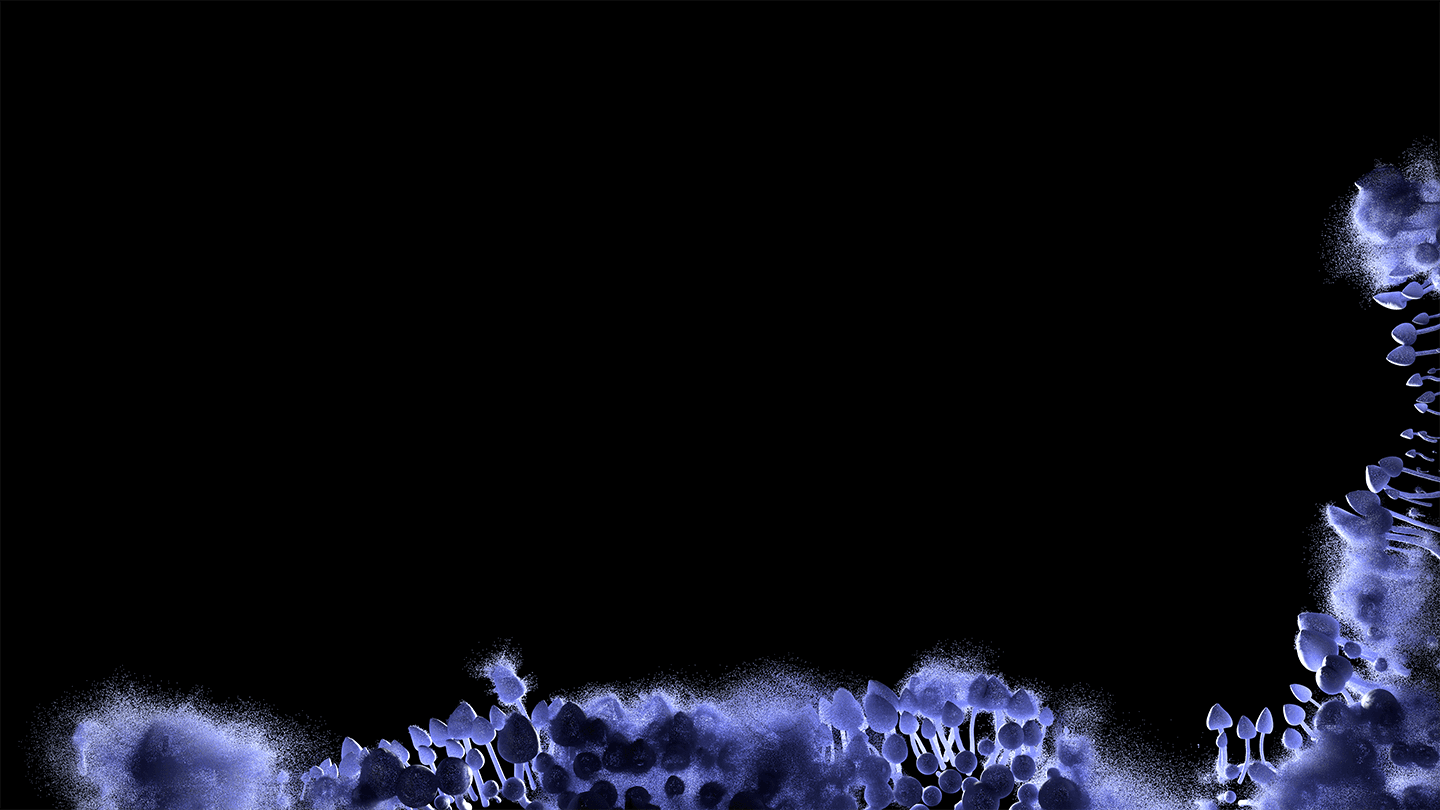
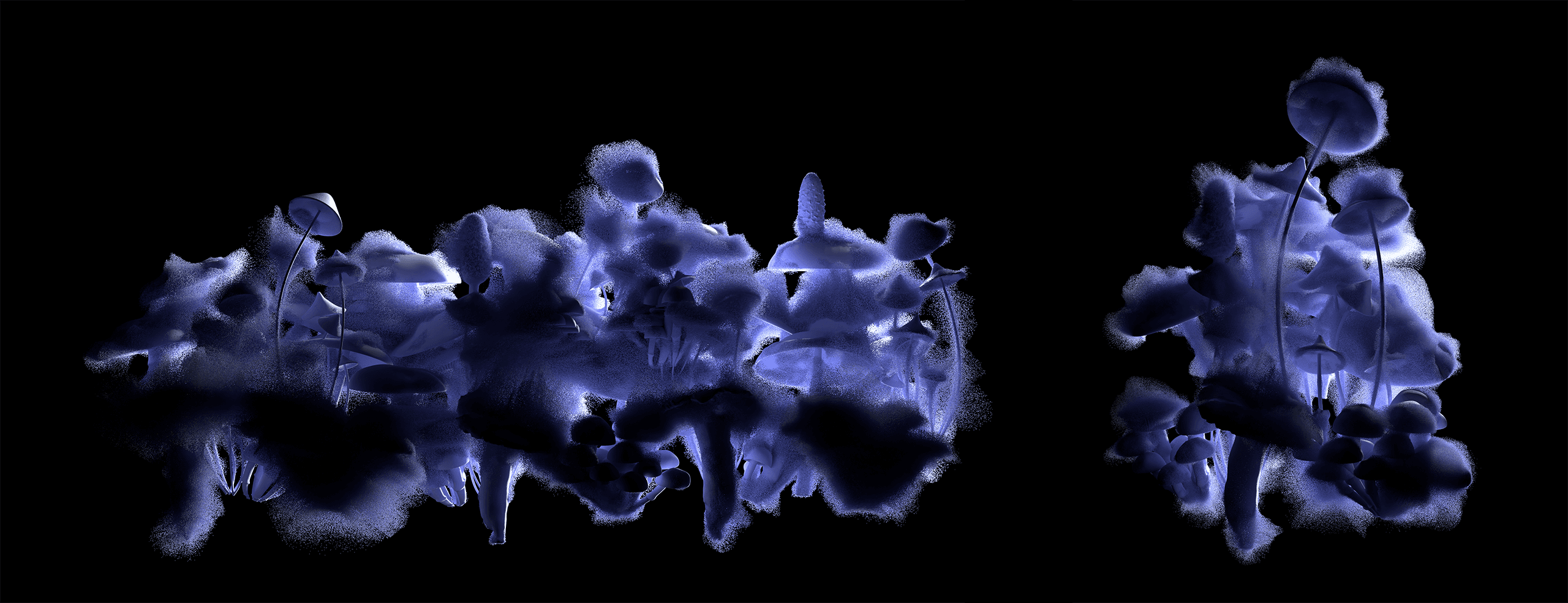
Built to sit on the corners of the room, it framed the space and added the depth that the walls didn't carry on their own. A common projection-mapping move when there's no architecture to lean on. Here, the Impostor Plants system became the architecture.
03.6_Material_Development
The plants were rendered intentionally flat. Color wasn't painted onto the surface, it was carried by bounced light. The result is a natural look that comes from how light moves through the scene, not from how saturated the texture is. Where the dissolve pattern activates, those spots pick up both color and intensity, reading brighter than the rest of the plant.
03_Reflection
The studio's working principle is to combine the pace of event work with the quality of high-end CGI advertising. Nature in Code was a test of that under the most rushed conditions the medium offers: a pilot show, a wide theme, a tight timeline.
Two systems were built procedurally from the ground up. Both became kits rather than finished renders, with each asset designed to serve the show first and stand alone second. Roots carried the show's narrative arc across five dramatic functions, from ambient establishing to dystopian close. Impostor Plants embraced its own artifice as the point, and used the same library to frame the room where the architecture itself didn't.
Custom procedural builds and event-work pace aren't a trade off. Once a system exists, they're the same speed. And a system built for the show, not just the asset, becomes its own library.